
Texas Property Records
Texas property records are public documents kept by the County Clerk in each of the state's 254 counties. They cover deeds, liens, mortgages, plat maps, and other instruments that affect real estate ownership. You can search these records in person at the county courthouse or online through the clerk's portal, county appraisal district websites, and several statewide databases. Whether you need to verify ownership, check for liens, or pull a copy of a recorded deed, Texas gives the public broad access to these files at little or no cost.
Texas Property Records Overview
Where Texas Property Records Are Kept
The County Clerk is the primary keeper of property records in Texas. Each of the 254 counties has its own clerk's office that records and indexes instruments affecting real estate. These include warranty deeds, quitclaim deeds, deeds of trust, mortgage releases, mechanic's liens, federal and state tax liens, UCC filings, and plat maps. Once a document is recorded with the County Clerk, it becomes part of the public record. Anyone can request a copy, and most clerks now post document images online.
Texas has no state-level property records office that consolidates all county filings. Records are decentralized by design. To search for a specific property, you need to know which county it sits in, then go to that county's clerk office or website. The Texas Property Code, Title 3, governs what must be recorded and how documents get indexed. Under Texas Property Code Section 12.001, instruments conveying or encumbering real property must be filed with the County Clerk to be effective against third parties.
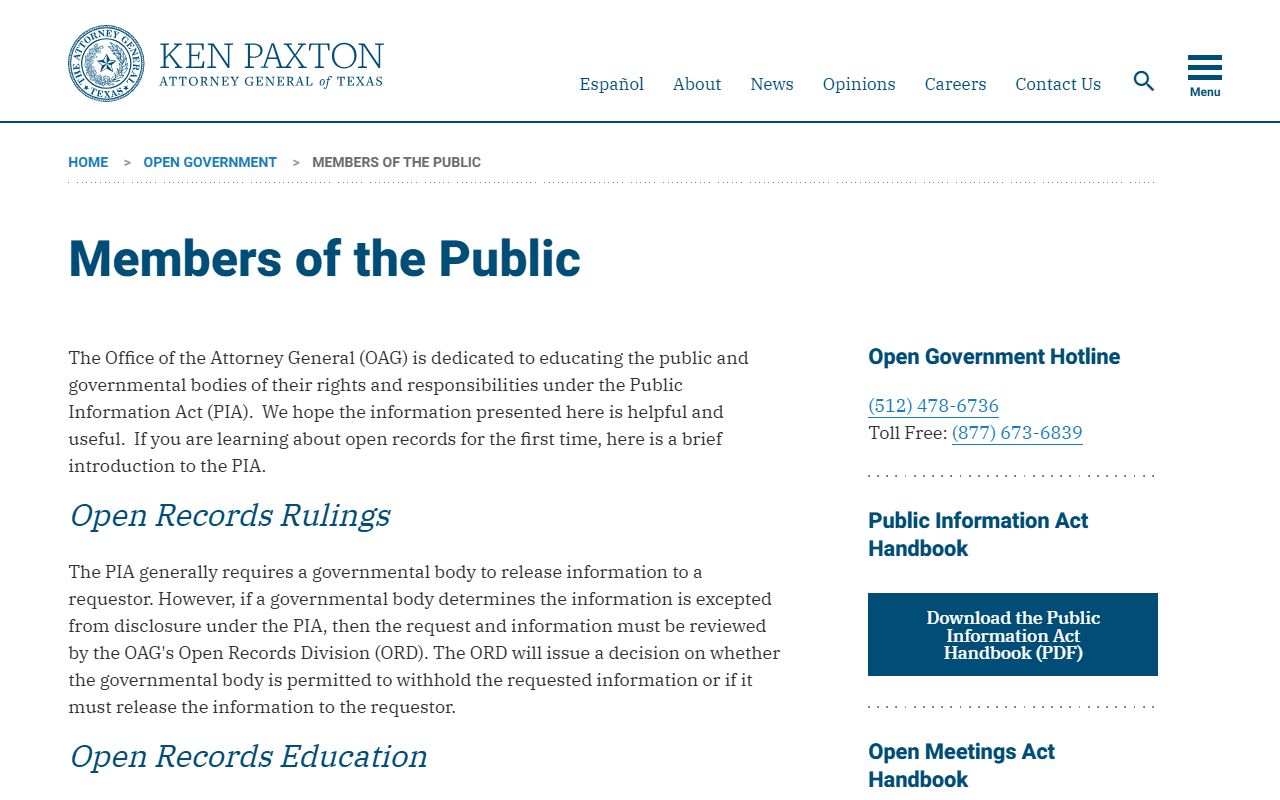
The Texas Attorney General's Open Government Division enforces the Texas Public Information Act, which gives the public the right to inspect and copy government records, including property documents held by county offices. Governmental bodies must respond to requests promptly and cannot charge excessive fees for copies. The OAG publishes a free Public Information Handbook that explains how the request process works.
Beyond the County Clerk, several state agencies maintain records that touch on property. The Texas Comptroller's Property Tax Assistance Division tracks appraisal data. The Texas General Land Office holds historical land grants. The Texas Secretary of State keeps UCC filings that may affect business property. Each plays a different role, and knowing which one has what you need can save a lot of time.
Texas Property Tax Records
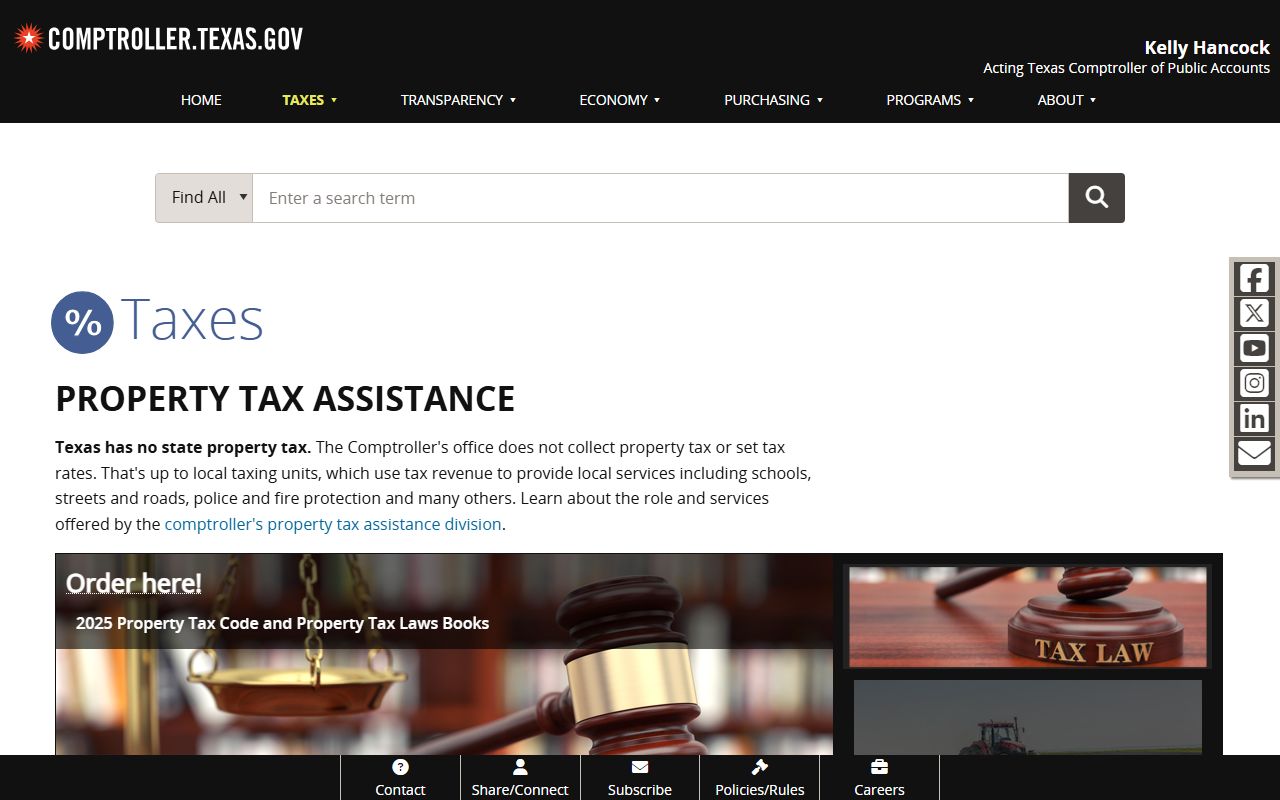
Texas has no state property tax. All property taxes are collected locally by county tax assessor-collectors working with appraisal districts. Each county has its own appraisal district that determines the value of every parcel within its borders. Those values feed into the tax bills sent by the county and other taxing entities like school districts and municipalities.
The Texas Comptroller's Property Tax Assistance Division (PTAD) oversees appraisal districts and conducts biennial Property Value Studies to check whether local values are accurate for school funding purposes. PTAD also performs Methods and Assistance Program reviews of all 254 appraisal districts. These reviews look at governance, taxpayer assistance, and appraisal methodology. About 200 forms are available through the Comptroller's website, covering exemptions, protests, renditions, and special appraisal programs. PTAD can be reached at 800-252-9121.
To search property tax records, go to the appraisal district website for the county where the property sits. Most districts let you search by owner name, address, or account number. Results show the owner of record, legal description, appraised value, exemptions applied, and a history of past values. Homestead, over-65, disability, and disabled veteran exemptions show up in these records. The protest deadline is typically May 15 or 30 days after you receive your notice of appraised value.
Senate Bill 2 from the 2023 Second Special Session made major changes, raising the homestead exemption from $40,000 to $100,000. That change shows up in appraisal records for eligible homeowners starting in the 2023 tax year.
Searching Texas Property Records Online
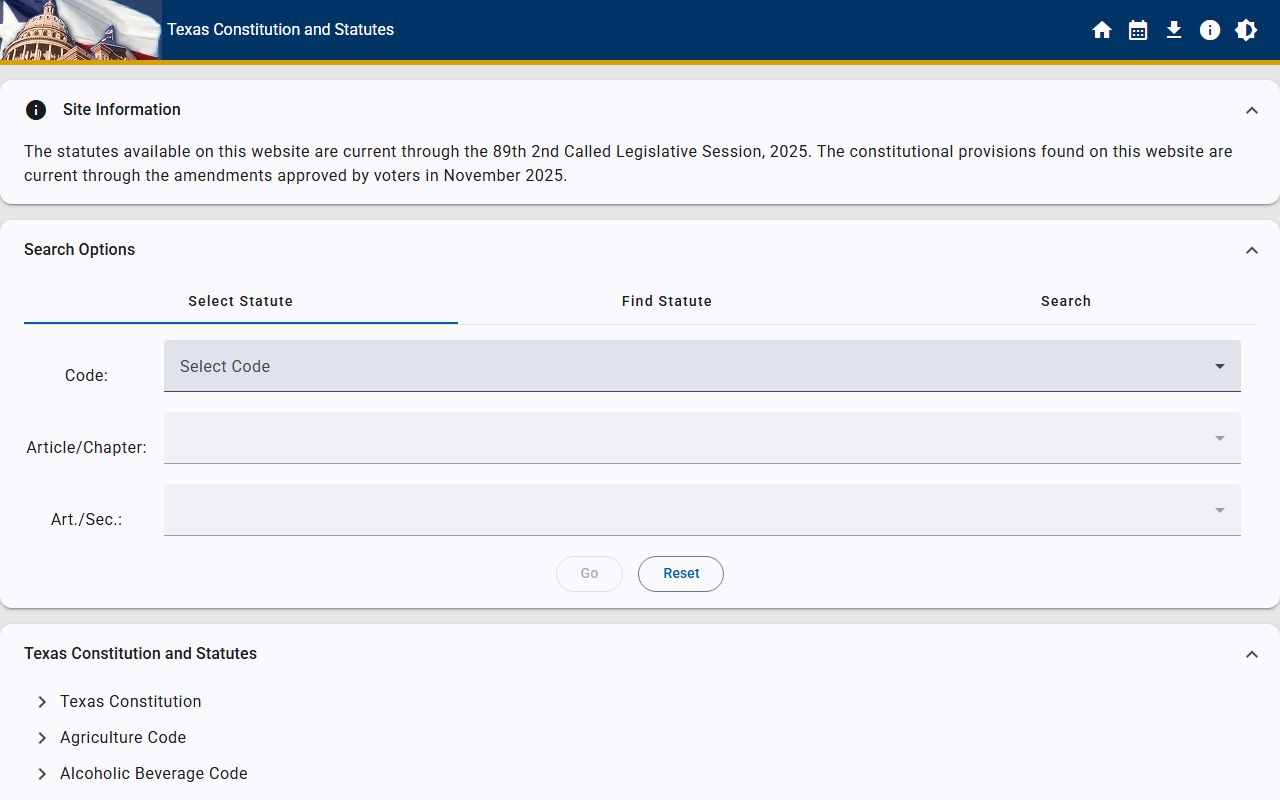
Most county clerks in Texas now offer free online searches of recorded documents. Larger counties like Harris, Dallas, and Bexar have robust portals where you can search by name, instrument number, or date range and view document images at no charge. Smaller counties may post only basic indexes without images, requiring an in-person visit for the full document. The Texas Property Code at statutes.capitol.texas.gov provides the legal framework for public access.
TexasFile is a third-party platform that aggregates county clerk records from many Texas counties. It offers free basic searches and paid document downloads. It covers Harris County records from 1836 to present. Similar aggregators cover other counties, though the county clerk's own site is always the most authoritative source for official copies.
For a property's tax and appraisal data, the county appraisal district website is the best starting point. These sites are free. They show ownership history, current appraised value, property characteristics, and tax payment status. GIS maps on appraisal district sites let you view parcel boundaries and nearby sales, which helps with valuation research.
Note: Online search tools show index data and document images, but certified copies of recorded instruments must be obtained from the County Clerk's office directly, with applicable copy and certification fees.
Real Estate Records and License Verification
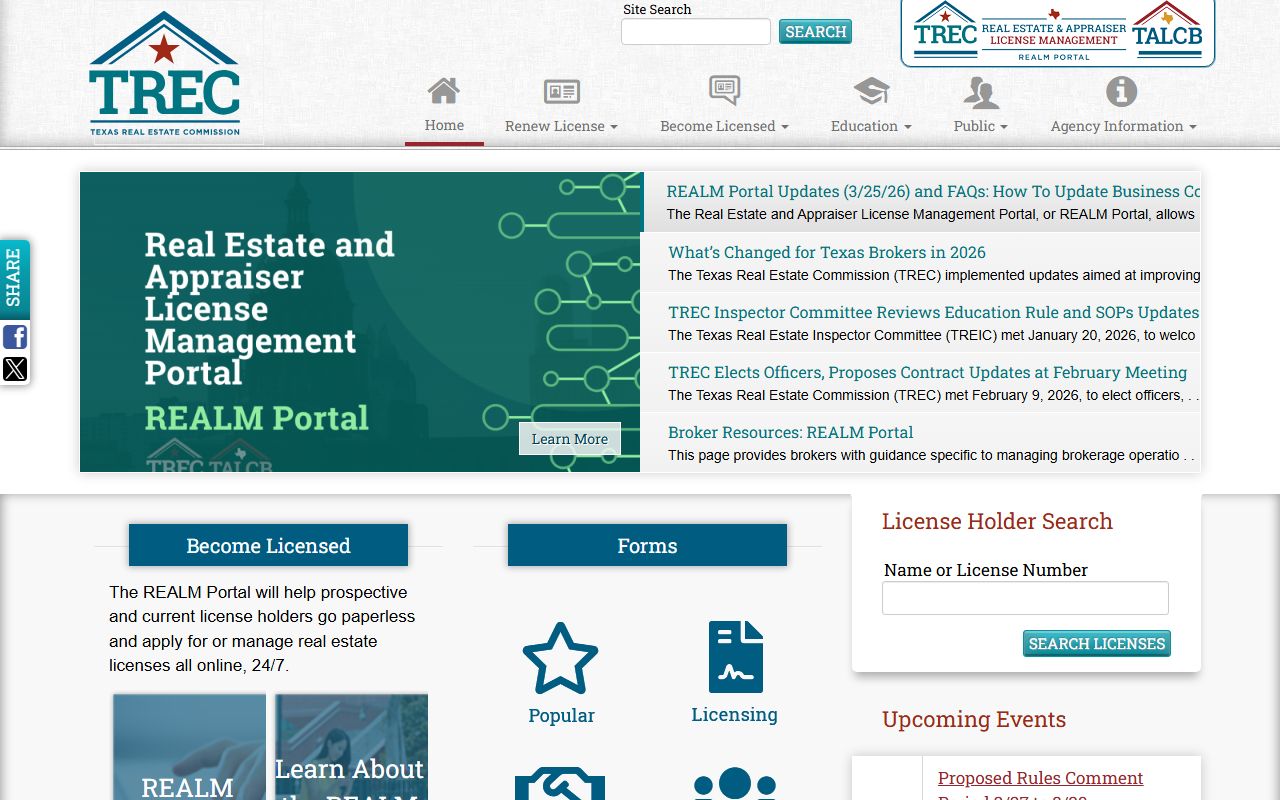
The Texas Real Estate Commission (TREC) licenses and regulates real estate brokers, sales agents, inspectors, and easement agents across the state. You can search the license status of any real estate professional through the TREC website. The public search covers individual and business entity licensees, appraisers, and appraisal management companies. License status, disciplinary history, and education records are all available. If you have a complaint about a real estate professional, TREC handles the intake and investigation.
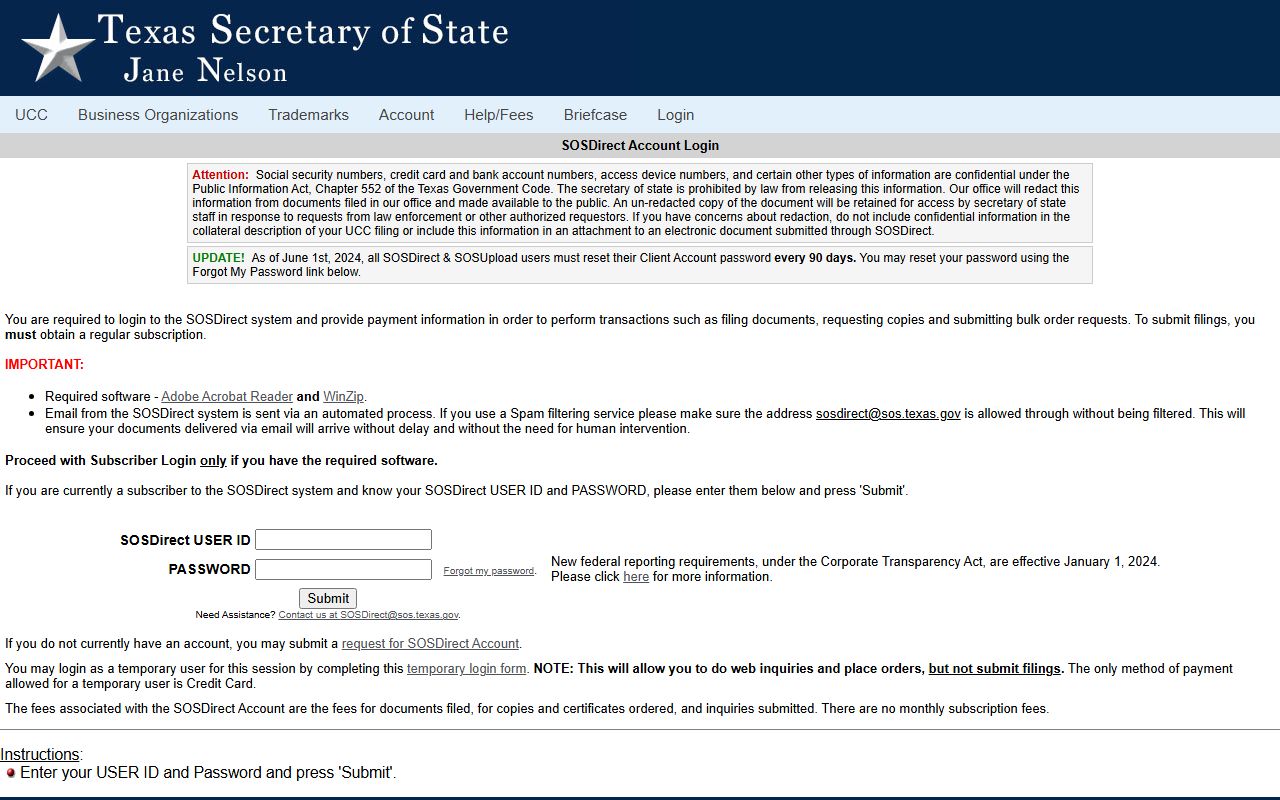
Business entities that own or encumber real property often appear in records at the Texas Secretary of State's SOSDirect system. This portal covers LLCs, corporations, assumed names (DBAs), and Uniform Commercial Code filings. UCC liens can reveal encumbrances on business-owned property and equipment. If you are researching a property that appears to be owned by a company rather than an individual, the SOS system helps you identify the legal entity behind the name.
TREC also licenses contractors involved in property inspections. The REALM Portal through TREC lets license holders manage their credentials online, and consumers can verify credentials before hiring someone to inspect a home or commercial property.
Eminent Domain and Transparency Records
Texas law requires all public and private entities with eminent domain authority to report their information to the Comptroller for public posting. Under Government Code Sections 2206.151 through 2206.157, these entities must disclose their name, contact information, legal authority, and the focus of their eminent domain powers. The reporting period runs November 1 through February 1 each year. Newly granted entities must report within 180 days. Non-compliant entities face penalties of up to $2,000.
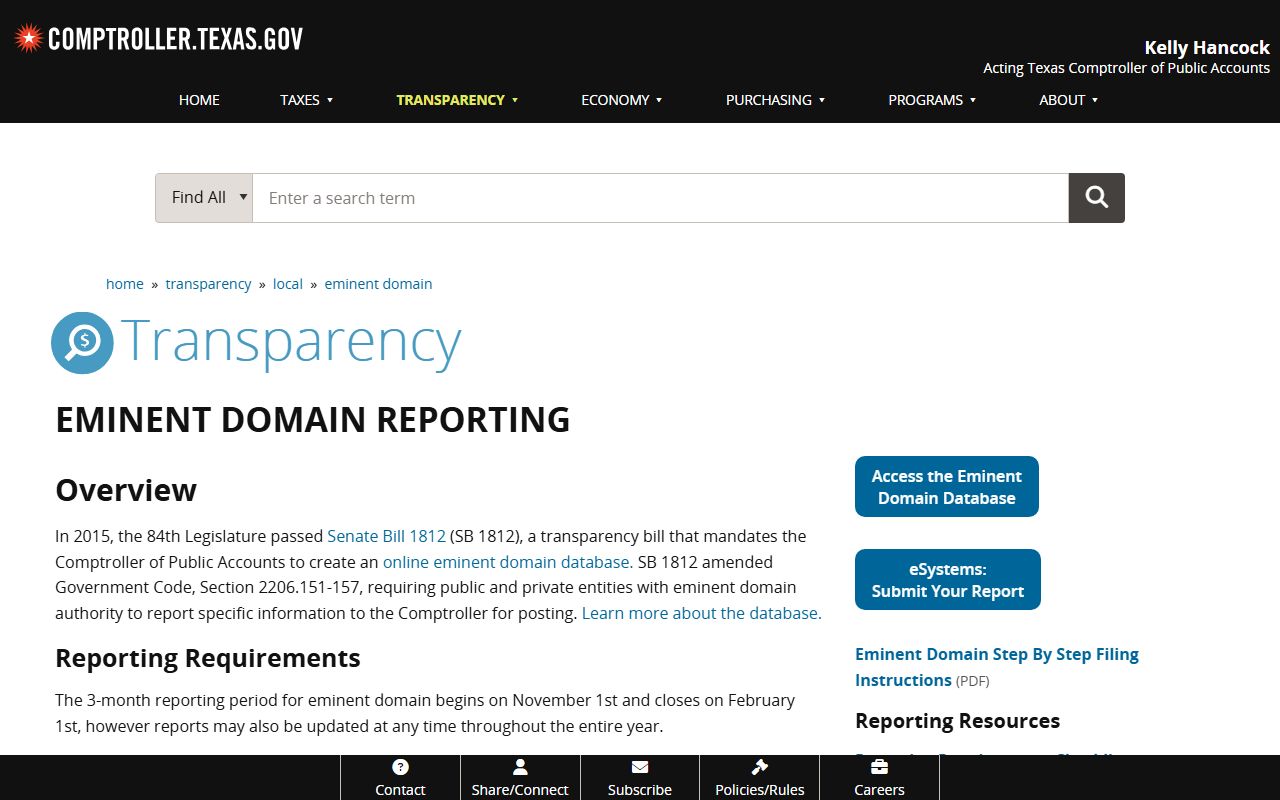
The searchable eminent domain database is available at the Comptroller's website. Each entity gets a unique six-digit ID after filing its first report. This resource is useful for property owners who want to know which entities near them hold the power of eminent domain, such as pipeline companies, utilities, and local governments.
Environmental and Historic Property Research
The Texas Commission on Environmental Quality (TCEQ) maintains a Central Registry of permits, enforcement actions, and compliance history for facilities and sites across the state. If a property has any environmental permits, contamination history, or ongoing compliance obligations, those records are searchable through the TCEQ database. This matters for buyers and developers doing due diligence on commercial or industrial land.
The Texas Historical Commission maintains the Texas Historic Atlas, which covers Texas Historical Markers and properties listed on the National Register of Historic Places. Historic designation affects what you can do with a property, what tax incentives apply, and what permits may be needed for renovation. Before buying or developing a site, a search of the THC database reveals any historic status that could affect your plans. The THC can be reached at 512-463-6100.
Ground disturbance on a property with potential archaeological significance should include a search of the THC database to screen for cultural or historic sites. This step protects both the property owner and any sites of significance that may lie on the land.
Vital Records That Affect Property Title
Death certificates, marriage records, and divorce decrees all touch property ownership in Texas. When a property owner dies, the estate must go through probate before title can transfer. A death certificate from the Texas Department of State Health Services Vital Statistics Section is required to start the probate process. Marriage records affect whether property acquired during a marriage is community or separate property. Divorce decrees address how real estate gets divided.
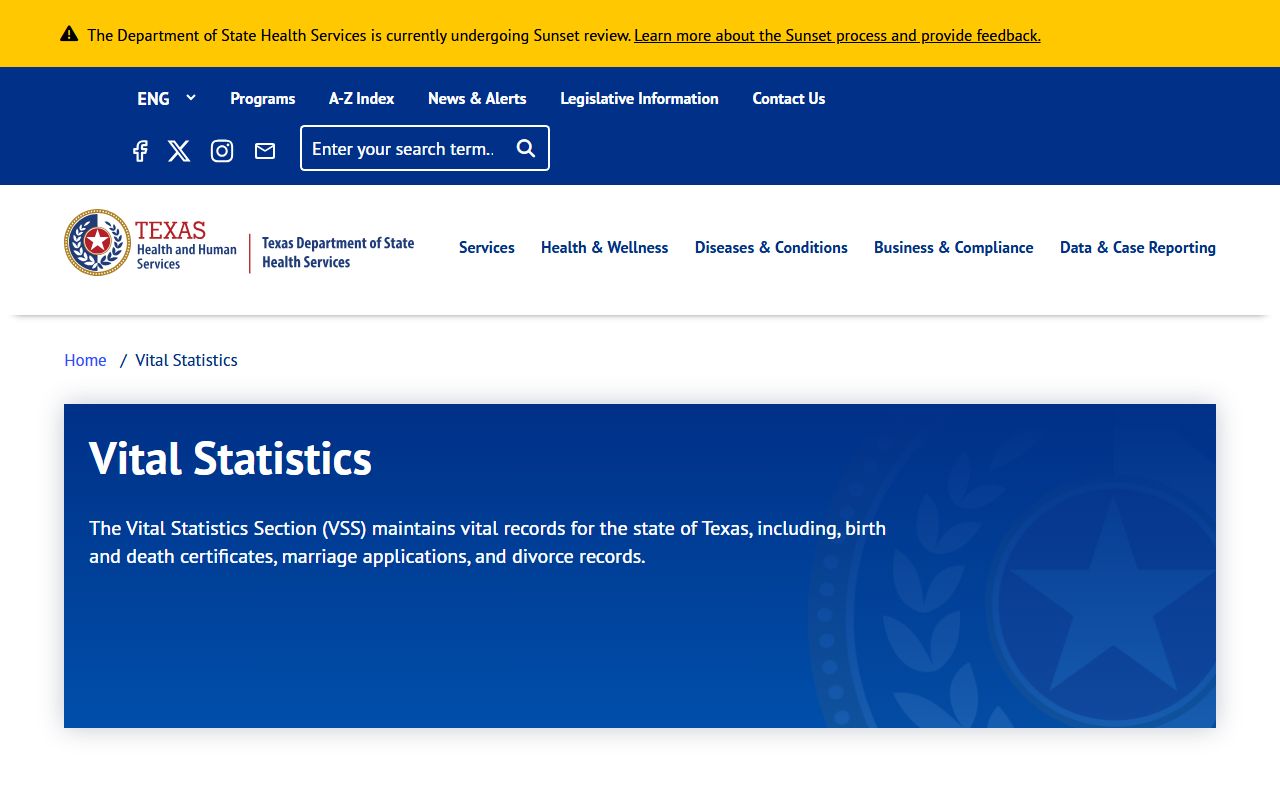
Certified copies of vital records are available from the VSS by mail, in person at their Austin office, or through the state's online ordering system. Processing times vary. Death certificates are required to open probate, record affidavits of heirship, and transfer property through a muniment of title. If you are settling an estate that includes Texas real property, getting the death certificate early in the process saves time.
Historical Land Grants and Archives
Texas has a rich history of land grants dating back to Spanish colonial rule. The Texas General Land Office holds the GLO Archives, which contains over 800,000 land grant records including Spanish, Mexican, and Republic of Texas grants. The database contains over 4,200 land titles from 1720 to 1836 covering 26 million acres. Individual land grant packets are being digitized and many are available online for free. Records not yet online can be viewed at the GLO office in Austin.
Each GLO record typically shows the county, abstract number, original grantee, patentee, title date, patent number, survey data, acreage, and any remarks. These records matter for chain of title research on land that has been in Texas since the early days of settlement. The GLO also maintains a surname index of grantees and patentees from the Republic and State of Texas. Texas divided land grants into 38 land districts for filing purposes, which do not match present-day county lines.
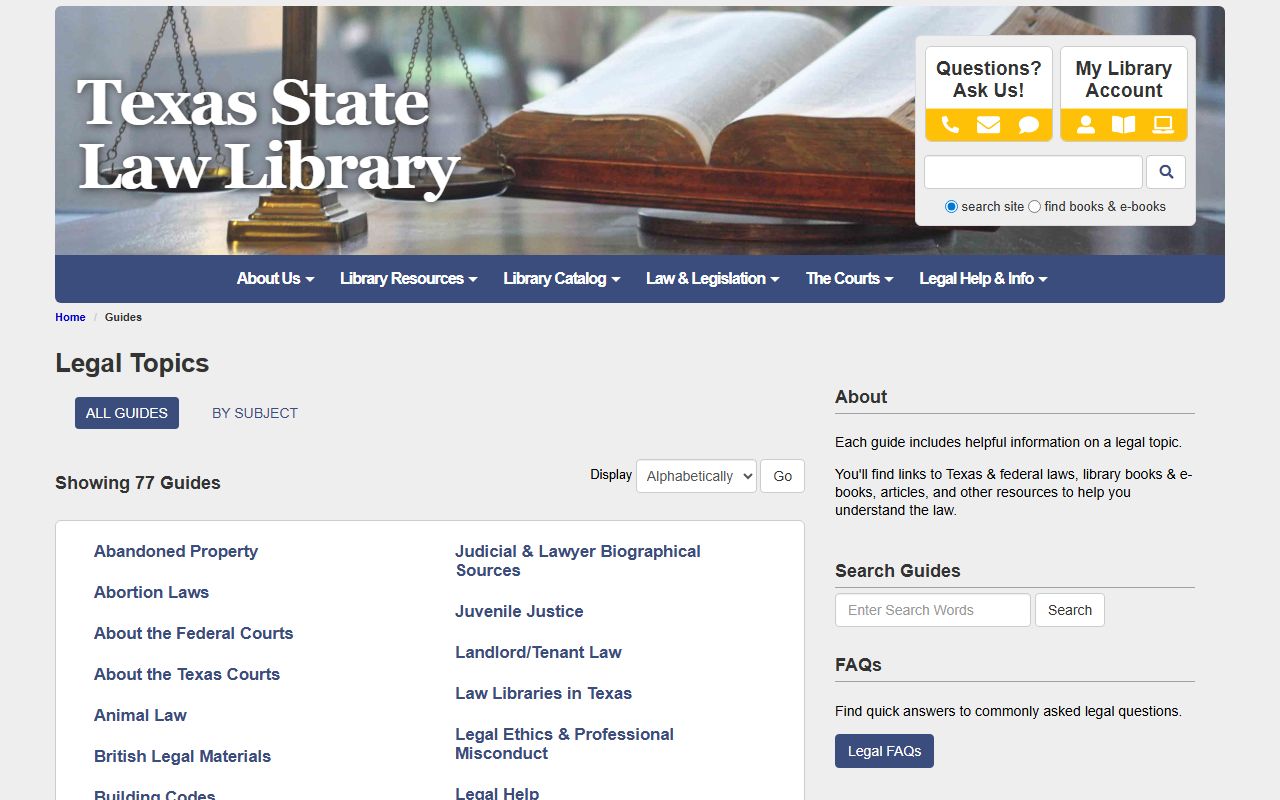
The Texas State Law Library provides research guides on property law topics, including real estate transactions, estate planning, probate, and landlord-tenant law. Each guide links to Texas and federal laws, library resources, and practical references. The library notes that it cannot interpret the law for specific situations, but its guides are a strong starting point for self-directed research.
Contractor Licenses and Property Work
The Texas Department of Licensing and Regulation (TDLR) licenses contractors and tradespeople who work on property across the state. TDLR covers electricians, HVAC contractors, elevator safety, code enforcement officers, and industrialized housing and buildings. If you hire someone to do work on your property, checking their TDLR license is a quick way to confirm they are legally authorized to do that type of work in Texas.

Code enforcement officers are also licensed through TDLR. These are the local officials who inspect properties for compliance with building codes and ordinances. Understanding who has inspection authority over a property can help owners address violations or plan development projects.
Business Records and Sales Tax Lookups
The Texas Comptroller's sales tax permit search lets you look up any business by taxpayer ID, EIN, legal name, or location. This tool is useful when researching a property that is operated as a business. You can confirm whether the business has an active sales tax permit and verify the legal name behind an assumed business name. Search results show active or inactive status.
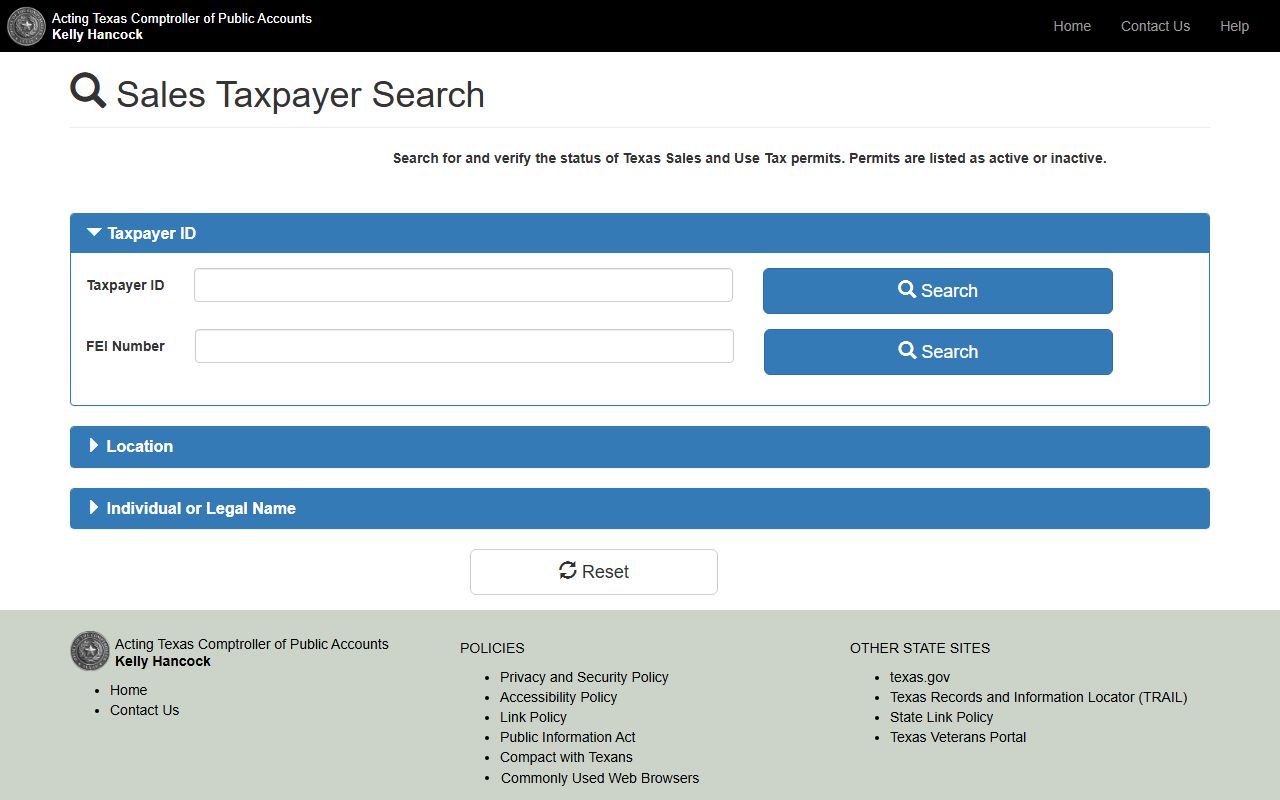
For property research that involves business ownership, combining the Comptroller's sales tax search with the Secretary of State's SOSDirect system gives a clear picture of who owns and operates a given property. These two resources together cover most business entities you will encounter in Texas real estate.
Note: Under Texas Property Code Section 11.008(k), online records must have social security numbers and certain financial account numbers redacted before being posted publicly.
Browse Texas Property Records by County
Each of Texas's 254 counties has its own County Clerk who records and keeps property documents for that area. Pick a county below to find local contact info, search portals, and resources for property records in that part of the state.
Property Records in Major Texas Cities
Property records for Texas cities are filed at the County Clerk's office in the county where the city is located. Select a city below to find out which county office handles property filings for that area and what resources are available locally.