
San Antonio Property Records
San Antonio property records are kept by the Bexar County Clerk, whose office handles all real property documents for the city and the broader Bexar County area. Whether you need a deed copy, want to check for liens, or need to record a new document, the Bexar County Clerk is the place to start. The office sits at 100 Dolorosa in downtown San Antonio and maintains records that stretch back to 1731, some of the oldest in Texas. You can search online or visit in person for certified copies and full document access.
San Antonio Overview
Where San Antonio Property Records Are Filed
All property documents for San Antonio are recorded at the Bexar County Clerk's office. This includes deeds, mortgages, deeds of trust, liens, easements, plats, and related instruments. The County Clerk is the legal custodian of all real property records in Bexar County, and no transfer of real estate is considered complete until the document is filed and recorded there.
Bexar County is one of the most historically significant counties in Texas for property records. The Clerk's office holds documents going back to 1731, including Spanish land grants and colonial-era records that predate Texas statehood. These historical records are a key resource for researchers, title companies, and anyone tracing ownership back several generations. Modern records are indexed electronically and searchable by name, date, or document type.
| Office | Bexar County Clerk - Real Property Records |
|---|---|
| Address | 100 Dolorosa San Antonio, TX 78205 |
| Phone | (210) 335-2216 |
| Website | bexar.org/County-Clerk |
| E-Recording | Available through authorized vendors |
The office is in downtown San Antonio near the main Bexar County courthouse complex. Branch locations exist throughout the county for certain services. Call ahead if you need to confirm what's available at a branch before you make the trip.
How to Search San Antonio Property Records
Bexar County provides online access to property records through its County Clerk Records Search portal. You can look up documents by owner name, grantee name, date range, document type, or instrument number. The system is free to use for basic searching. To get a full copy of a document, you can view and print directly from the portal or request a certified copy from the clerk's office.
The online system covers modern records well. For older documents, especially those predating electronic filing, you may need to visit the office in person or contact staff for help with older index books. Bexar County's Spanish Archives are a separate collection covering colonial-era documents and require a different search approach. Staff at the County Clerk's office can point you to the right resource depending on how far back you need to go.
To search, you will typically need at least one of the following:
- Owner name (grantor or grantee)
- Instrument or document number
- Date range for the recording
- Document type (deed, lien, release, etc.)
- Legal description or property address
The Bexar County Appraisal District at bcad.org is another useful tool. BCAD lets you search by address, owner name, or account number to get appraisal values, exemption status, property characteristics, and tax estimates. BCAD records are separate from the County Clerk's deed records but both are needed for a full picture of a property's status.
San Antonio Municipal Archives and Records
San Antonio also maintains a Municipal Archives program through the Office of the City Clerk. The San Antonio Municipal Archives is located at 719 S. Santa Rosa and holds official city records dating back to 1837. These records include City Council proceedings, ordinances, and administrative documents. While deed records go to Bexar County, the city's own archives are a resource for permit histories and zoning decisions that affect property use.
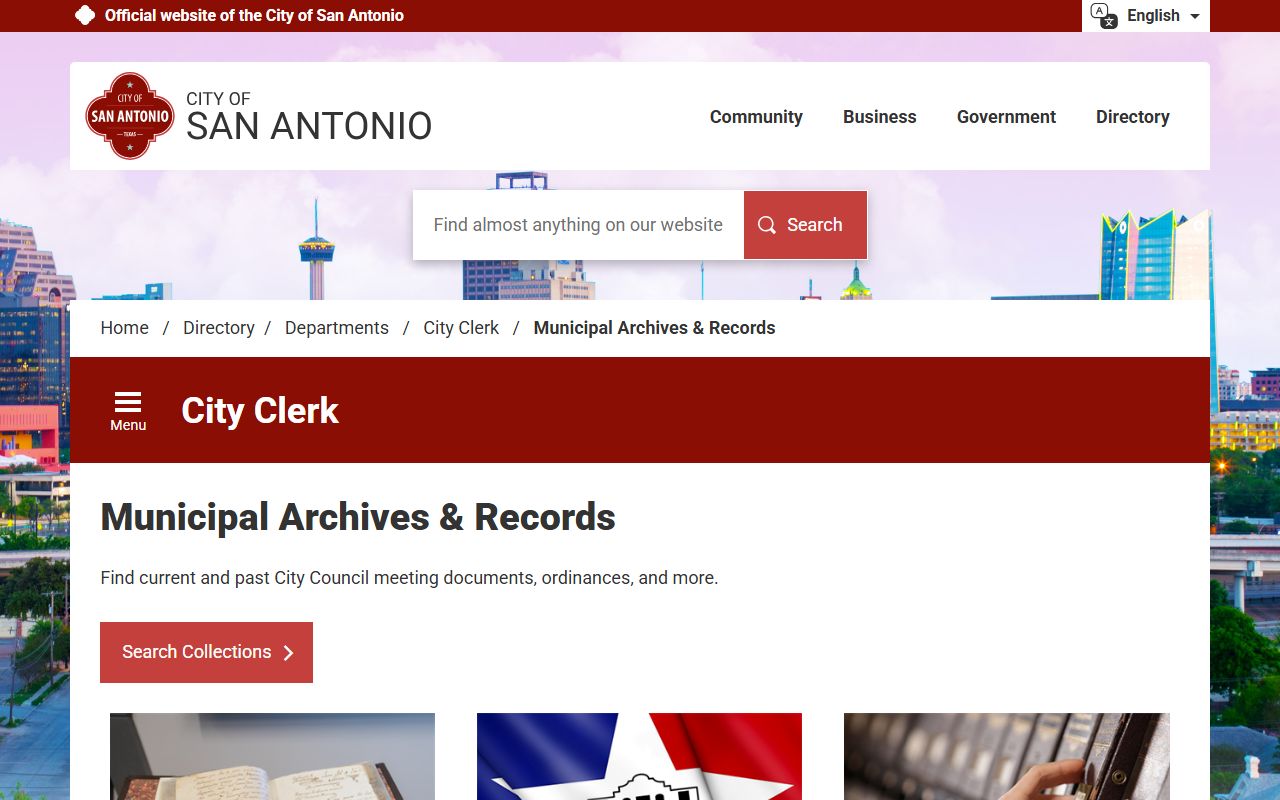
The San Antonio Municipal Archives partners with the San Antonio Public Library's Texana and Genealogy department, which can be useful for tracing older property and land use histories tied to the city's own records. The City Clerk also maintains birth, death, and fetal death records in Bexar County going back to 1873.
Note: The Municipal Archives covers city administrative records. All real estate deed recording and property instrument filings go to the Bexar County Clerk, not the City Clerk.
Types of Property Records Available
The Bexar County Clerk's office holds a wide range of property-related documents for San Antonio. Each serves a different purpose, and knowing which type you need helps speed up your search.
Common property record types include warranty deeds and special warranty deeds, which transfer ownership from a seller to a buyer. Deeds of trust and mortgages are filed when a lender holds a security interest in property. Release of liens shows when a debt secured by real property has been paid off. Mechanics liens are filed by contractors or suppliers who haven't been paid. Easements and right-of-way documents define how land can be used by parties other than the owner. Plats and subdivision documents define lot boundaries and are required when land is divided into smaller parcels.
Other common filings include lis pendens notices (indicating active litigation affecting the property), federal and state tax liens, assumed name or DBA certificates, and UCC financing statements. All of these are recorded at the Bexar County Clerk's office and are searchable through the public records system.
Bexar County Appraisal District (BCAD)
The Bexar County Appraisal District sets the appraised value for all taxable property in San Antonio and Bexar County. Visit bcad.org to search properties by address, account number, owner name, or legal description. You can view current appraised value, ownership details, exemptions applied, and property characteristics like square footage, year built, and lot size.
BCAD also allows you to file a protest online if you disagree with your property's appraised value. The protest deadline is May 15 or 30 days after your notice of appraised value, whichever is later. The site includes interactive maps showing property boundaries and nearby comparable sales. Chief Appraiser Michael Amezquita leads the district, which is governed by a board appointed by the taxing entities in the county.
Homestead, over-65, and disability exemption applications are available through BCAD. These can reduce your property tax burden significantly. The Bexar County Tax Assessor-Collector at bexar.org handles tax payments, delinquency plans, and tax certificates once values are set by BCAD.
Recording Fees and Process
Recording fees at the Bexar County Clerk follow the Texas standard schedule. The fee is $26 for the first page and $4 for each additional page of the same document. If a document lists more than five names in the index, there is an additional $0.25 per name beyond the first five. These fees apply to deeds, mortgages, liens, releases, and other recorded instruments.
You can submit documents for recording in person at the main office, by mail, or through e-recording. E-recording is available 24/7 through authorized electronic filing vendors and is the fastest way to get a document recorded. Title companies and law firms that handle many filings typically use e-recording to reduce turnaround time. Once a document is recorded, it receives a stamp showing the official recording date, time, and instrument number.
Bexar County also offers a property fraud alert service. Property owners can sign up to receive a notification whenever a document is recorded against their property. This is a free service and a good way to catch unauthorized transfers or fraudulent filings early.
Texas Public Information Act
Property records in San Antonio and throughout Texas are public records under the Texas Public Information Act, Chapter 552 of the Texas Government Code. This law gives the public the right to access government records, including those held by the Bexar County Clerk. Requests for records that aren't immediately accessible online can be submitted in writing to the County Clerk's office. The office typically has 10 business days to respond to a written records request.
Most property records at the County Clerk are already available online or over the counter without a formal request. The Public Information Act becomes more relevant when seeking records that haven't been digitized or when requesting bulk data. If a request is denied, the requester can seek a ruling from the Texas Attorney General's office. The AG's office handles these determinations and publishes opinions on what must be disclosed.
Additional Resources for San Antonio
Beyond the County Clerk and BCAD, a few other resources are useful when researching property records in San Antonio. The Bexar County Tax Assessor-Collector handles tax payments and certificates. Their site lets you check whether taxes are current or delinquent, which matters when buying or evaluating a property. San Antonio Development Services at sanantonio.gov handles building permits, zoning approvals, and code compliance records tied to specific parcels.
For historical research, the Bexar County Spanish Archives hold more than 250,000 pages of colonial-era documents. These include early land grants, surveys, and records from the Spanish and Mexican periods. The San Antonio Public Library's Texana collection supplements these historical property and land use records. These resources are especially valuable for title research going back before Texas statehood.
Bexar County Property Records
San Antonio is in Bexar County. All property instrument filings for the city go through the Bexar County Clerk. For full details on search tools, recording procedures, and county-level resources, visit the Bexar County property records page.