
Hale County Property Records Search
Hale County property records are maintained by the County Clerk in Plainview, Texas. The clerk's office records and indexes all instruments affecting real property in the county, including deeds, liens, deeds of trust, plat maps, and releases. Most records are searchable online at no cost through the county's official portal. This guide covers how to find Hale County property records, what types of documents exist, the fees involved, and additional resources for property research in this part of the Texas Panhandle.
Hale County Overview
Hale County Clerk Office
The Hale County Clerk is the official custodian of all property records in the county. The office keeps deeds, deeds of trust, lien filings, lien releases, easements, oil and gas leases, and subdivision plat maps for all land in Hale County. The courthouse is in Plainview, and the office is open during regular business hours Monday through Friday.
Hale County sits on the Southern High Plains, and its land records reflect the area's character: a mix of agricultural land transactions, farm and ranch deeds, oil and gas instruments, and residential filings in Plainview. The clerk's office indexes all documents by grantor and grantee name so you can search by the seller's or buyer's name when looking up a specific transaction.
| Office | Hale County Clerk |
|---|---|
| Address | 500 Broadway St., Room 140, Plainview, TX 79072 |
| Phone | (806) 291-5261 |
| Hours | Monday through Friday, 8:00 AM to 5:00 PM |
| Website | halecounty.org |
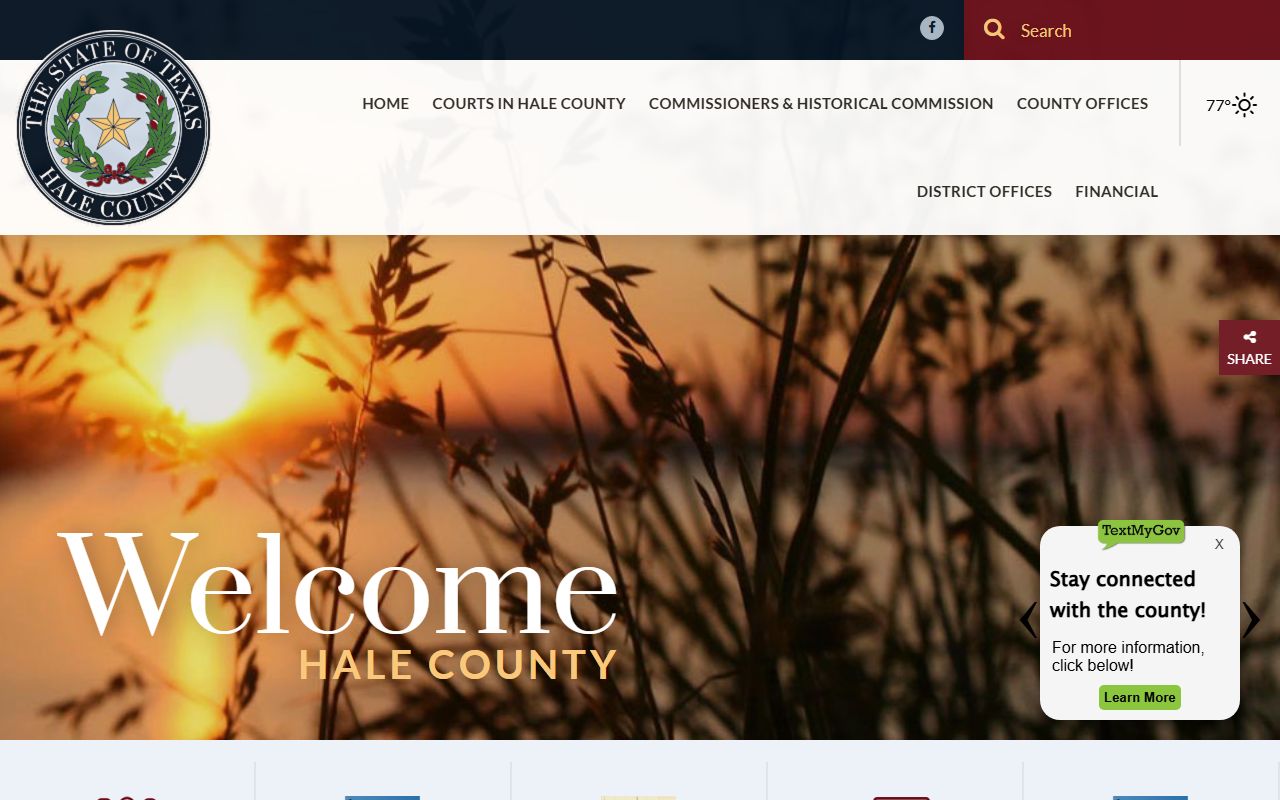
The county's online portal provides free access to indexed records. Searches can be conducted by party name, document type, and date range. Most current records include viewable document images. For documents that predate digitization, in-person access at the courthouse is required.
Searching Hale County Property Records
The online portal linked from the Hale County Clerk's website is the primary tool for searching property records. Enter the grantor or grantee name to pull a list of matching instruments. Each result shows the document type, parties, recording date, and instrument number. You can click through to view the image and confirm the document is what you need.
In-person access is available at the courthouse in Plainview. Public search terminals are at the clerk's office. Staff can explain how the system works but will not conduct the search on your behalf under state guidance. If you need to trace a chain of title going back many decades, you may also want to contact a local abstractor who specializes in Hale County land records.
Note: For agricultural land in rural Hale County, water rights and irrigation district records may be relevant in addition to deed records filed with the county clerk.
Hale County Property Document Types
The County Clerk records all instruments that affect real property title. Under Texas Property Code Section 12.001, instruments must be recorded to provide constructive notice to future buyers and lenders. Once filed in Hale County, a document is part of the permanent public record for that parcel.
Common document types include general warranty deeds, special warranty deeds, quitclaim deeds, deeds of trust, release of lien instruments, mechanic's and materialman's liens, abstract of judgment liens, oil and gas leases, pipeline easements, agricultural easements, surface use agreements, homestead designations, assumed name certificates, and subdivision plat maps. Agricultural counties like Hale often have a higher proportion of oil and gas and farm-related filings compared to more urbanized Texas counties.
Subdivision plat maps define lot lines, street rights-of-way, and easements for planned subdivisions in Plainview. These are filed with the clerk and can be viewed or copied on request. Plat maps are essential when researching a residential lot in a development because they establish the legal boundaries of the parcel.
Hale County Appraisal District
The Hale County Appraisal District maintains property appraisal and tax records for all real property in the county. The CAD database shows the current owner as listed in the tax rolls, the appraised value, any exemptions, and basic property data. When you know a property address but not the owner's name, the appraisal district is often the fastest way to get that information before pulling the deed record.
The appraisal district office is in Plainview. Online property searches are available by owner name, address, and account number. The CAD records reflect ownership based on deeds filed with the clerk, but they update on an annual cycle, so a recent sale may not appear until the next tax year. Hale County property owners can file a value protest with the Appraisal Review Board if they believe the assessed value is too high, with the deadline typically in May.
Agricultural exemptions are common in Hale County given the prevalence of farming and ranching. The appraisal district's records will show whether a property has an ag exemption applied, which can significantly affect the effective tax rate on that land.
Recording Fees and Procedures
The Hale County Clerk charges $26 to record the first page of any document. Each additional page is $4.00. Indexing more than five names in a single document adds $0.25 per name over the five-name limit. These fees are established by the Texas Legislature and are consistent across most counties in the state.
Documents can be submitted for recording in person, by mail, or through an eRecording service. If you mail a document, include a check or money order made out to the Hale County Clerk. eRecording is available through vendors like Simplifile and allows documents to be submitted digitally, recorded, and returned electronically. This is the preferred method for title companies and lenders who file in Hale County.
After recording, the document gets an instrument number and a recording stamp. The original is returned to the submitter. Certified copies cost $1.00 per page plus $5.00 for the certification. Uncertified copies are less expensive and work for most research purposes. Request a certified copy only when the recipient specifically requires one.
Texas Public Information Act
Property records held by the Hale County Clerk are public documents. Under Texas Government Code Chapter 552, the Public Information Act gives any person the right to request and receive government records. No reason is required. You do not need to be the landowner or have any direct interest in a property to look up its deed records.
The clerk's office is required to respond promptly. For indexed records available online, access is immediate. For older or paper-only records, the office has ten business days to respond or notify you of a timeline. If you have trouble getting records, the Texas Attorney General's Open Government Division provides guidance and handles complaints about records access.
Online document images may have certain fields blanked out. Texas law requires redaction of social security numbers and financial account numbers from online versions of public records. The full text is preserved in the original paper record held by the clerk.
Additional Hale County Resources
The Texas Comptroller's Property Tax Assistance Division provides statewide resources on property tax topics including exemptions, appraisal district oversight, and protest procedures. In Hale County, local taxing entities include the county, Plainview ISD, and other local districts that set their own tax rates.
For historic land research on this part of the Panhandle, the Texas General Land Office holds original land grant records. The GLO database lets you trace early ownership for land that was granted during the original survey and settlement of West Texas. This is useful if you are researching agricultural land with a history going back to the late 1800s.
The Texas Secretary of State's SOSDirect system provides business entity and UCC lien records. The Texas State Law Library has online guides on property law topics that apply to Hale County land transactions including recording requirements, lien law, and title issues.
Nearby Counties
Hale County is located in the Texas Panhandle region. Nearby county clerks may hold records for properties close to county boundaries.