
Smith County Property Records
Smith County property records are maintained by the County Clerk in Tyler, Texas. The clerk's office at 200 E. Ferguson Street holds deeds, liens, mortgages, UCC filings, and other land instruments with real property records dating back to 1846. Online search is available through the county's official portal. Whether you are checking a chain of title, looking for liens, or confirming ownership, this guide covers how the Smith County records system works and what resources are available.
Smith County Overview
Smith County Clerk Office
The Smith County Clerk is the official custodian of all real property records in the county. The main office is at 200 E. Ferguson Street in Tyler, TX 75702. The clerk maintains deeds, mortgages, liens, releases, UCC filings, assumed name certificates, and federal tax liens. Birth and death certificates from 1903 and marriage licenses from 1846 are also on file here. Multiple branch locations throughout the county provide additional access points for residents.
Smith County records go back to 1846 when the county was organized. The online Official Public Records search portal lets you look up documents by name, date, or document type. E-recording is accepted through authorized vendors. The county also provides a property fraud alert service so owners can monitor when documents are recorded under their name.
| County Clerk | Smith County Clerk's Office |
|---|---|
| Address | 200 E. Ferguson St., Tyler, TX 75702 |
| Online Search | smith-county.com |
| eRecording | Accepted through authorized vendors |
| Records From | 1846 to present |
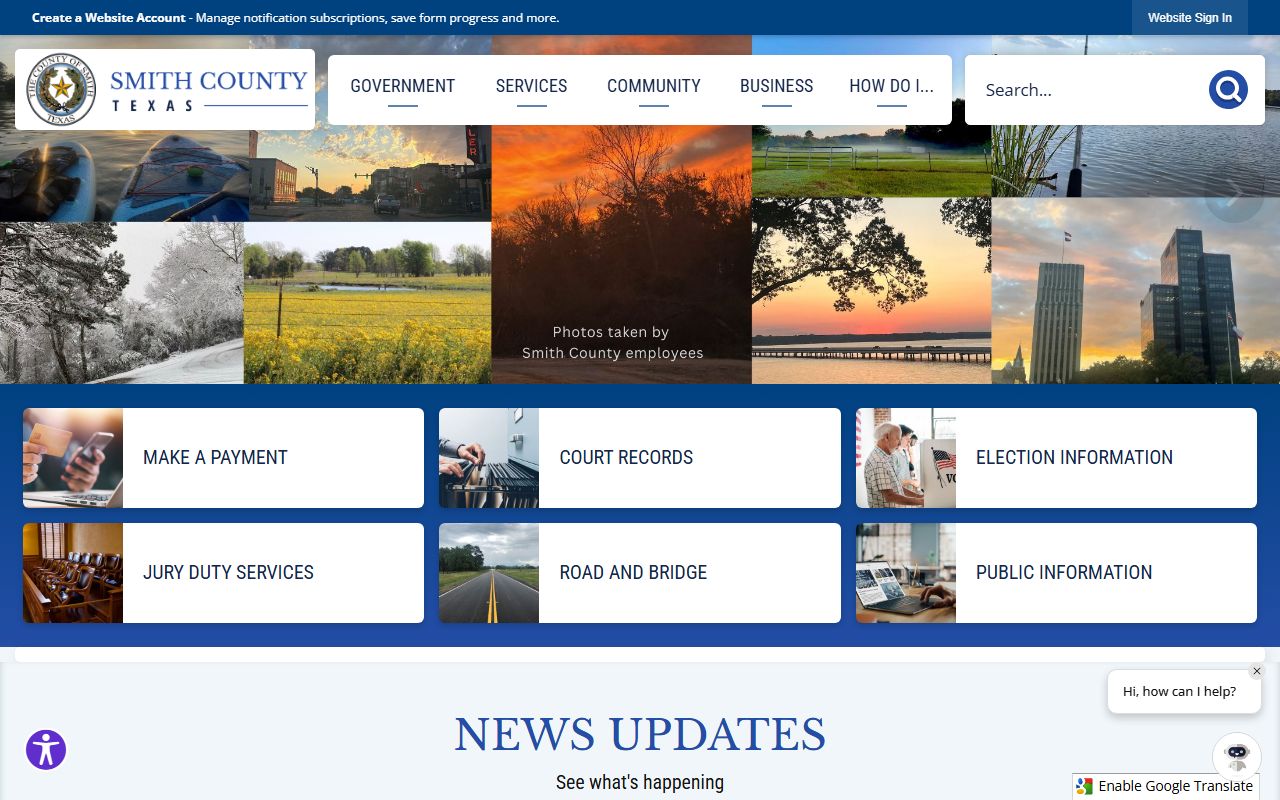
The county's online Official Public Records search is available through smith-county.com. You can search by grantor or grantee name, document type, date range, or instrument number. Document images are viewable online. Smith County Appraisal District provides a separate portal for ownership and tax records.
Search Smith County Property Records Online
The Smith County Clerk's official online portal is the starting point for most property record searches. Go to smith-county.com and access the Official Public Records search. You can search by the grantor name (seller or person transferring), grantee name (buyer or person receiving), document type, date range, or instrument number. Results show the document type, recording date, party names, and links to document images.
For in-person searches, visit the main office at 200 E. Ferguson Street in Tyler. Smith County also has multiple branch locations throughout the county for added convenience. Staff can help you navigate the search terminals but cannot conduct record searches on your behalf under AG Opinion WW-607. You are expected to search the indexes yourself, or you can hire a title company or abstractor to do the research for you.
The property fraud alert service lets you sign up for free email notifications when any document is recorded under your name in Smith County. This is a useful tool for monitoring against fraudulent deed filings. Contact the clerk's office to set this up.
Types of Smith County Property Records
Smith County is one of the larger East Texas counties, and the clerk's office holds a broad range of recorded instruments. Under Texas Property Code Section 12.001, instruments must be recorded to give legal notice to third parties. The clerk's index covers every type of land document filed in the county since 1846.
Common property record types in Smith County include warranty deeds, special warranty deeds, quitclaim deeds, deeds of trust, mortgage releases, mechanic's liens, judgment liens, tax liens, federal tax liens, lien releases, easements, right-of-way agreements, oil and gas leases, mineral deeds, UCC filings, assumed name certificates, and plat maps. Each document is assigned a unique instrument number and indexed under all party names. Multiple branch offices mean that recording volume in Smith County is higher than in many smaller Texas counties.
Under Texas Property Code Section 13.001, a recorded instrument is constructive notice to any subsequent buyer or lender. This is the legal basis for why title searches are required before real estate closings. If a lien is on record in Smith County and a buyer doesn't find it, the buyer is still bound by it.
Smith County Appraisal District
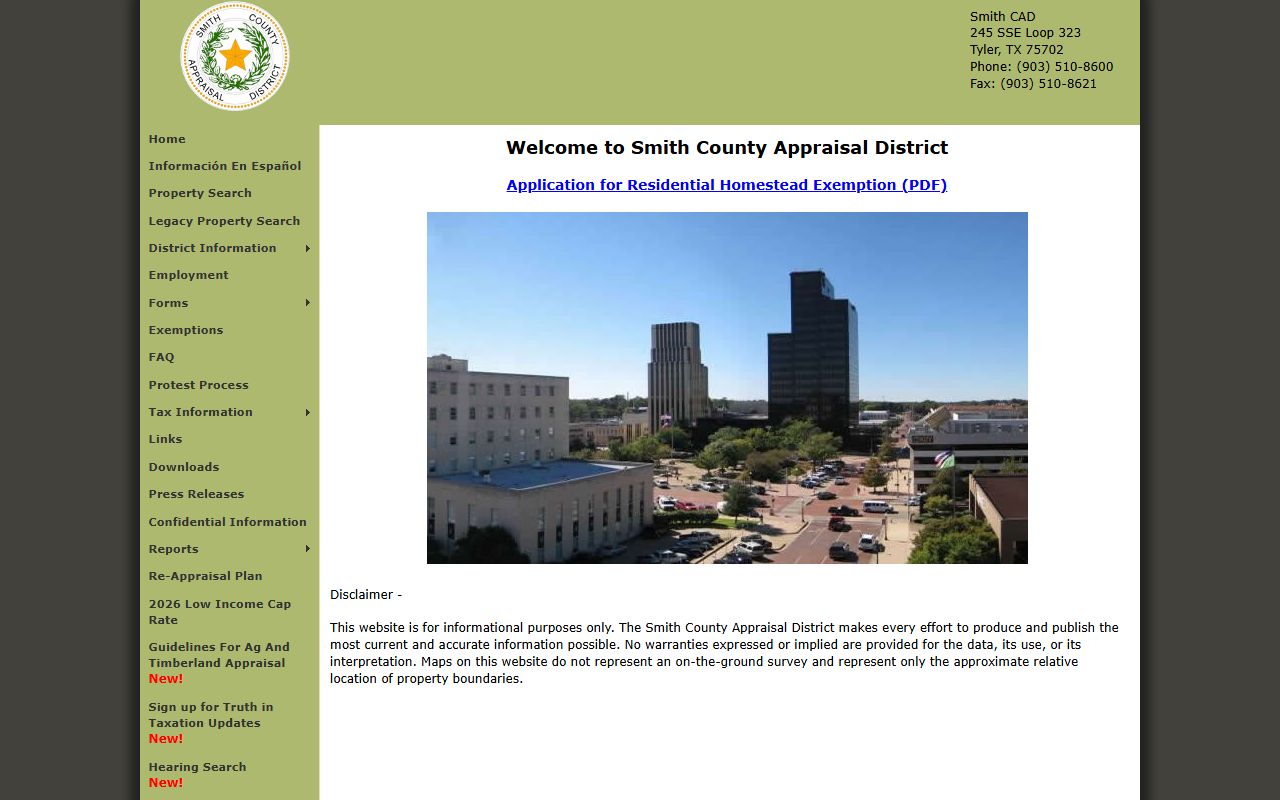
The Smith County Appraisal District maintains appraisal and tax records for all taxable property in the county. Chief Appraiser Mike Gromyko oversees the CAD, which is appointed by the county's taxing entities. The online portal at smithcad.org lets you search by owner name, property address, account number, or legal description. Results show current ownership, appraised value, exemptions, and property characteristics.
The Smith County CAD provides interactive maps showing property boundaries and comparable sales data. You can file a protest online if you believe your property is over-appraised. The protest deadline is May 15 each year. Exemption applications for homestead, over-65, disability, and other categories are available through the CAD website. Email notifications for value updates are also available through the portal.
Note: The CAD updates ownership records annually and may lag behind recent sales by several months. For the most current ownership, check the recorded deed in the County Clerk's system.
Recording Fees and Procedures
The Smith County Clerk charges $26 for the first page of a recorded document and $4 for each additional page. If a document names more than five parties requiring indexing, an extra $0.25 applies for each name over five. These fees are set by state statute and apply to deeds, liens, releases, leases, and all other instruments.
Smith County accepts documents in person, by mail, and through eRecording vendors. E-recording is the fastest option for title companies and lenders who record frequently. Authorized eRecording vendors submit and receive documents electronically, with the recorder returning the stamped original digitally. For mail submissions, include a check payable to the Smith County Clerk and a return-addressed envelope.
Certified copies of recorded documents cost $1.00 per page plus a $5.00 certification fee. Plain uncertified copies are less expensive. For most due diligence purposes, uncertified copies are fine. Request certified copies specifically when you need them for court filings or government agencies that require them.
Texas Public Information Act
Smith County property records are public under Texas Government Code Chapter 552. Anyone can request and receive copies without stating a reason. You don't need to own the property or be involved in a transaction to look up records. The law covers all government records, including those maintained by the County Clerk.
The clerk's office must respond promptly to records requests. If producing a record will take more than ten business days, the office must notify you of the expected timeline. Most Smith County property records are indexed and available online, so response times are typically fast. For older records not yet in the digital system, a formal written request to the clerk gets you access to the paper files. Disputes about records access are handled by the Texas Attorney General's Open Government Division.
Some information in online document images may be redacted. Social security numbers and financial account numbers must be removed from publicly viewable copies under state law. The originals on file at the clerk's office contain the full, unredacted information.
Additional Resources for Smith County Research
Beyond the County Clerk and CAD, several other sources support Smith County property research. The Texas Comptroller's Property Tax Assistance Division provides statewide resources on exemptions, appraisal districts, and protest procedures. Texas has no state property tax, but local taxing entities in Smith County set rates that apply to property in the county.
For historical land research, the Texas General Land Office holds over 800,000 historical land grant records. Smith County land originates from Republic of Texas grants, and those original documents are searchable through the GLO database. If you are tracing a property with roots going back to the 1800s, the GLO archive is a valuable starting point.
The Texas Secretary of State's SOSDirect system covers business entity records and UCC filings at the state level. The Texas State Law Library offers free research guides on Texas property law, recording requirements, and easements. Tyler is home to the county seat for Tyler, Texas, and additional local resources are available through the city's offices.
Nearby Counties
Smith County is in East Texas. Check that you have the right county before searching, especially for properties near county boundaries.