
Gregg County Property Records
Gregg County property records are filed and maintained by the County Clerk in Longview, Texas. The clerk's office holds deeds, deeds of trust, liens, releases, easements, and other instruments affecting real property in the county. Online search is free for most records, and copies are available in person or by mail. This guide explains how the system works, where to search, what records exist, and what it costs to get a copy or file a document in Gregg County.
Gregg County Overview
Gregg County Clerk Office
The Gregg County Clerk is the official keeper of all real property records in Gregg County. The office records, indexes, and preserves deeds, mortgages, liens, plat maps, and other instruments filed against land in the county. The clerk is located in Longview at the county courthouse and is open Monday through Friday during regular business hours.
Gregg County is in the 4th Administrative Judicial Region. The clerk's office processes a high volume of documents given that Longview is one of the larger cities in East Texas. Records are indexed by grantor and grantee names, allowing searchers to look up a property by the names of buyers or sellers. Online search is available through the county's official web portal.
| Office | Gregg County Clerk |
|---|---|
| Address | 101 E. Methvin St., Suite 200, Longview, TX 75601 |
| Phone | (903) 236-8430 |
| Hours | Monday through Friday, 8:00 AM to 5:00 PM |
| Website | co.gregg.tx.us |
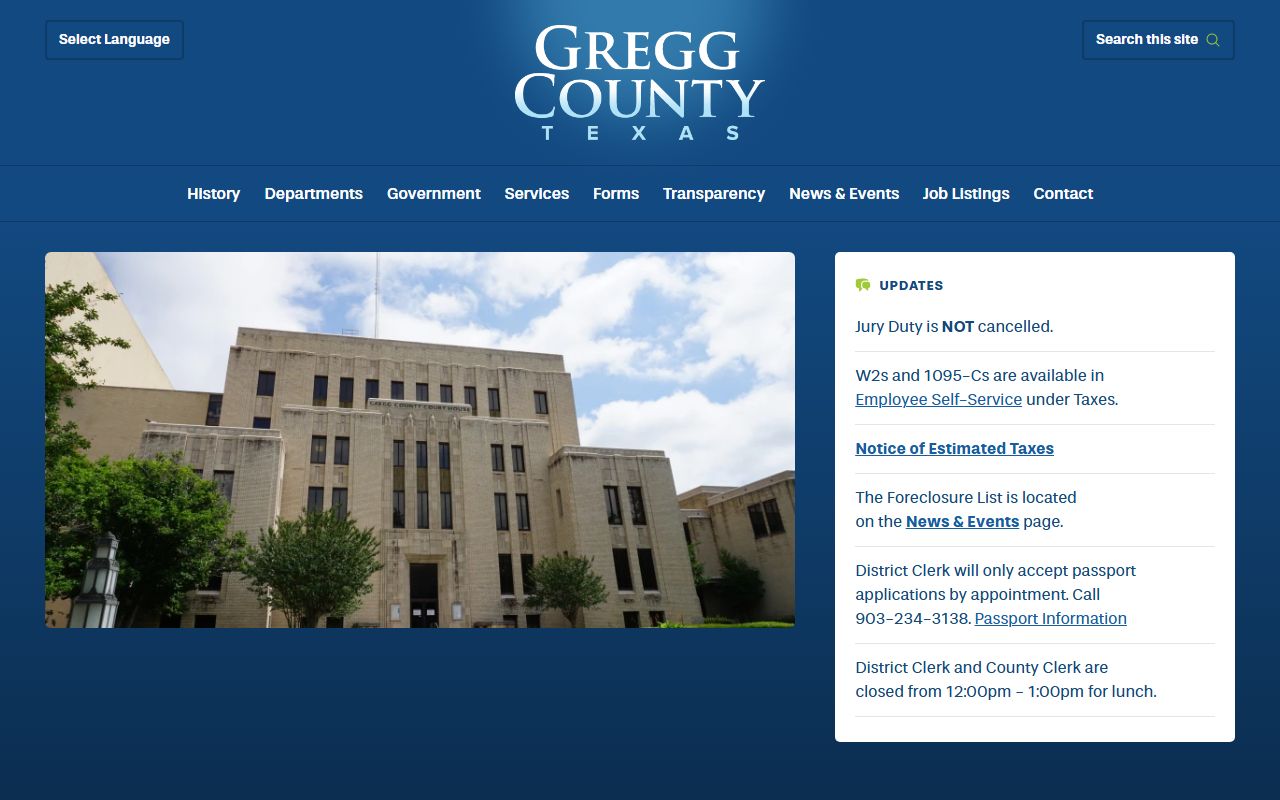
The Gregg County Clerk's website provides access to the online records portal where you can search by name, document type, and date range. Most current records are fully available online. For older documents not yet digitized, in-person access at the courthouse may be necessary. Staff can point you to the right index but cannot conduct the search for you.
How to Search Gregg County Property Records
Searching Gregg County property records online is free. The county's public access portal lets you look up documents by grantor name, grantee name, instrument number, or document type. You can also filter by date range to narrow results. When you find a document, you can view the image online and download it if needed.
For in-person searches, go to the clerk's office at 101 E. Methvin St. in Longview. The office has public terminals available. You do not need an appointment for a records search. Bring the property address or the owner's name to start. If you know the instrument number or book and page reference from a prior title search, that speeds things up considerably.
Third-party services like TexasFile also provide access to Gregg County property documents. These services charge a subscription or per-document fee but can be useful if you do frequent searches. For a one-time lookup, the free county portal is the better choice.
Note: When searching by name, try variations including maiden names, initials, and common misspellings, since historical indexing was done by hand and errors do occur.
Types of Property Records in Gregg County
The Gregg County Clerk records all instruments that affect title to real property in the county. Under Texas Property Code Section 12.001, these instruments must be recorded to provide constructive notice to future buyers and lenders. The range of document types is broad and covers nearly every kind of real estate transaction.
Common record types include general warranty deeds, special warranty deeds, quitclaim deeds, deeds of trust, mechanic's and materialman's liens, lien releases, oil and gas leases, easement agreements, right-of-way grants, homestead designations, assumed name certificates, and subdivision plat maps. Each document is assigned a unique instrument number and indexed by all party names. Gregg County also sees a significant number of oil and gas related filings given the county's history in the East Texas oil field.
Plat maps are filed for all recorded subdivisions and show lot boundaries, street names, and public easements. The original mylar maps are kept in the clerk's office. These are important when buying a home in a subdivision because they define the legal lot lines and any platted easements that may affect the property.
Gregg County Appraisal District
The Gregg County Appraisal District maintains the official property tax appraisal records for all taxable real and personal property in the county. The CAD records show current ownership as reflected in the tax rolls, appraised market value, any exemptions applied, and property characteristics like acreage, building size, and land use type.
The appraisal district office is separate from the County Clerk. While the clerk's records reflect what has been legally filed and recorded, the CAD records reflect the current tax assessment picture. Both are useful for property research, but they serve different purposes. The CAD is a good starting point when you only know the property address and need to find the owner's name before searching the deed records.
If you disagree with your Gregg County appraisal, you can file a protest with the Appraisal Review Board. The protest deadline is typically May 15 each year or 30 days after the notice of appraised value is mailed, whichever is later. Details about protests and exemptions are available through the appraisal district's office in Longview.
Note: The CAD records update annually and may not reflect a recent deed transfer right away.
Recording Fees in Gregg County
The fee to record a document with the Gregg County Clerk is $26 for the first page. Each additional page costs $4.00. If a document lists more than five names to be indexed, there is a charge of $0.25 per name over five. These amounts are set by the Texas Legislature and apply statewide with minor county-level variations.
You can submit documents for recording in person at the courthouse, by mail, or through an approved eRecording service. Mail submissions require a check or money order payable to the County Clerk. eRecording is the fastest method and is commonly used by title companies, lenders, and attorneys who file documents regularly. When using eRecording, the document is submitted digitally, recorded the same day, and returned electronically.
Certified copies of recorded documents cost $1.00 per page plus a $5.00 certification fee. Plain uncertified copies cost less. For most title research and lien verification purposes, an uncertified copy is sufficient. If you need the copy for a court filing, legal proceeding, or government agency, request a certified copy.
Texas Public Information Act
Property records filed with the Gregg County Clerk are public records. Under Texas Government Code Chapter 552, the Public Information Act guarantees that anyone can access government records without having to explain why they want them. You do not need to be the property owner or a party to any transaction to look up these records.
The clerk's office must respond to a records request promptly. For records already available online, the response is essentially immediate. For documents that need to be pulled from storage or copied, the office has ten business days to respond before it must notify you of a delay. The Texas Attorney General's Open Government Division handles complaints and publishes guidance on public records access rights.
Some fields in online document images may appear blank. Under Texas law, certain personal identifiers including social security numbers and financial account numbers must be redacted from online records. The underlying paper document retained by the clerk contains the full original text, but those fields are masked in the digital version to protect privacy.
Additional Resources for Gregg County
The Texas Comptroller's Property Tax Assistance Division provides statewide help with property tax topics including exemption forms, appraisal district oversight, and protest procedures. Texas does not have a state property tax, so all property taxes in Gregg County are levied by local entities including the county, school districts, and the city of Longview.
For historical land research, the Texas General Land Office holds over 800,000 historical land grant records. Gregg County was carved from Upshur and Rusk counties in 1873, and the original land grants for this area can be traced through the GLO database. This is useful if you are researching a rural property with ownership history going back to the Republic of Texas period.
The Texas Secretary of State's SOSDirect system covers UCC filings and business entity records. If a lien involves a business, checking the SOS records helps confirm the legal entity name. The Texas State Law Library also offers research guides on property law topics that apply to Gregg County transactions.
Nearby Counties
Gregg County borders several East Texas counties. If a property sits near a county line, confirm the correct county before searching records.