
Ector County Property Records
Ector County property records are maintained by the County Clerk in Odessa, Texas. The clerk's office is the official keeper of deeds, liens, mortgages, oil and gas leases, and other land instruments for all property in the county. Ector County is a major oil-producing region of West Texas, and its land records reflect decades of active mineral and real property transactions. This guide explains how to search Ector County property records, what documents the clerk keeps, and how the process works.
Ector County Overview
Ector County Clerk Office
The Ector County Clerk is the official custodian of all property and land records in the county. The clerk's staff handle deeds, deeds of trust, liens, releases, oil and gas leases, mineral deeds, plats, and other instruments. The office is in the Ector County courthouse in Odessa and is open Monday through Friday during regular business hours.
Ector County has an extensive oil and gas history going back to the Permian Basin boom of the 1920s. This means the county's land records include a large volume of mineral leases, royalty assignments, oil and gas unit agreements, and related instruments in addition to standard residential and commercial deed records. Early records before 1927 may be in Midland County records, since Ector County was carved out of Midland County in 1887 but organized later.
| Address | 300 N. Grant Ave., Odessa, TX 79761 |
|---|---|
| Hours | Monday through Friday, regular business hours |
| Website | co.ector.tx.us |
Online access to Ector County property records is available through TexasFile and CourthouseDirect. Both platforms offer free index searches and paid options for full document images. The clerk's website at co.ector.tx.us also links to the official search portal for current records. For the city of Odessa, residents can also access Odessa city-level information on the city page.
Search Ector County Property Records
The Ector County Clerk maintains the official property record index for all land transactions in Ector County. Online access is available through both the county's official portal and several third-party services.
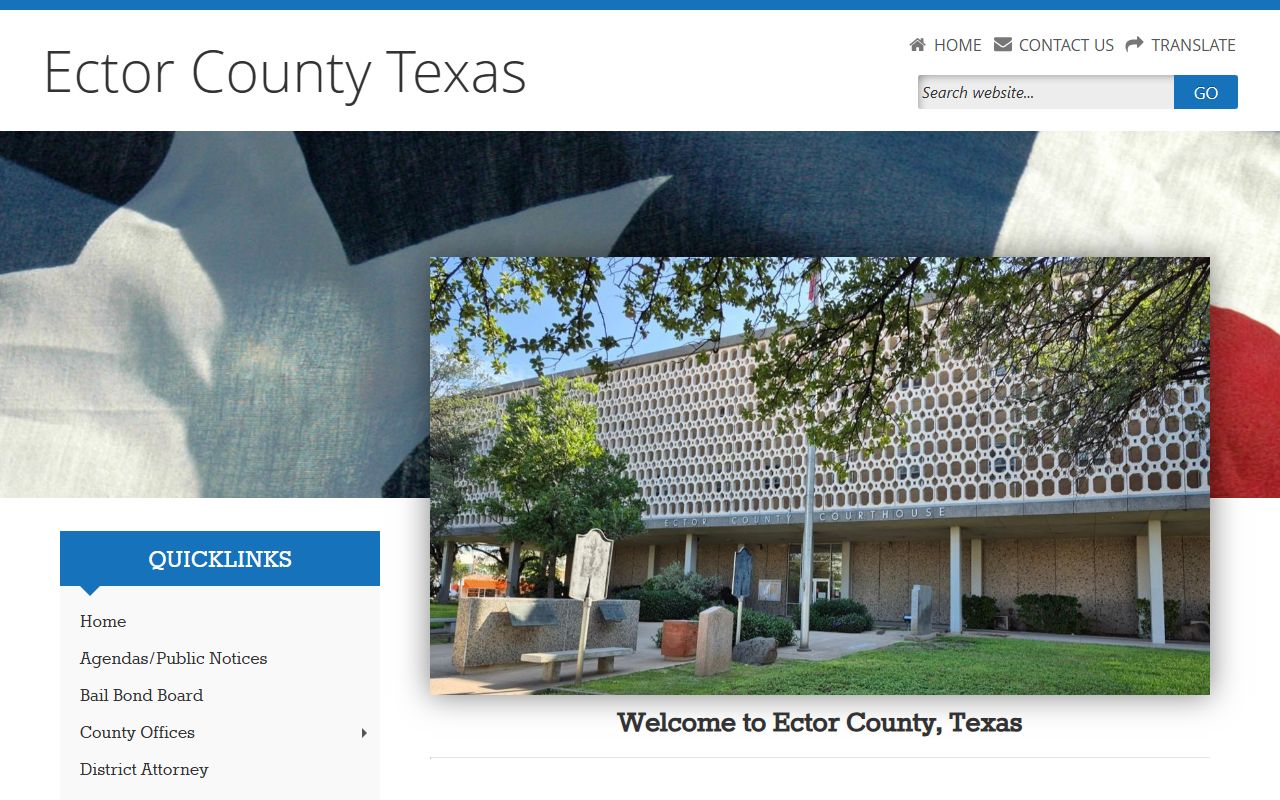
To search online, use TexasFile for free index searches that show grantor/grantee names, document types, recording dates, and instrument numbers. To view full document images, you need a paid subscription. You can also use CourthouseDirect for a similar search experience. Searches by name, document type, or date range all work through these platforms.
For in-person research, visit the clerk's office in the courthouse during business hours. Staff can guide you to the right index systems but are not required to search records for you under AG Opinion WW-607. For complex oil and gas title research, a West Texas land title company or landman familiar with Permian Basin records is a valuable resource. Early records from before county organization may require searching Midland County's records as well.
Types of Ector County Property Records
The County Clerk in Ector County records all instruments affecting real and mineral property in the county. Once filed, each document is assigned an instrument number and indexed by party name. Under Texas Property Code Section 12.001, recording an instrument gives legal notice of its contents to all subsequent buyers and lenders.
Property records in Ector County include warranty deeds, quitclaim deeds, deeds of trust, mortgage lien releases, mechanic's liens, judgment liens, tax liens, federal tax liens, oil and gas leases, mineral deeds, royalty assignments, pooling agreements, easements, right-of-way documents, plats, subdivision maps, and assumed name certificates. Given the Permian Basin oil activity, mineral instruments make up a significant portion of the county's land records. UCC financing statements related to oil field equipment and production are also common.
Under Texas Property Code Section 13.001, a recorded instrument is constructive notice of its contents to all parties. Once a deed or lease is filed in Ector County, anyone who later deals with that property is legally treated as having known about it. This makes searching the records essential before any property or mineral rights purchase in Ector County.
Ector County Appraisal District
The Ector County Appraisal District maintains property appraisal and tax roll data for all taxable property in the county. These records are separate from the deed records at the County Clerk's office but are useful for checking current ownership, appraised values, and exemption status.

Online property search at ectorcad.com lets you look up parcels by owner name, property address, or account number. The CAD also handles exemption applications including homestead, over-65, and disability exemptions. If you disagree with an appraised value, you can file a protest with the Appraisal Review Board before the annual deadline, which is typically May 15. Oil and gas mineral interests are valued and assessed separately from surface rights in Ector County.
Note: CAD records reflect the annual tax rolls and may lag behind recent deed transfers by several months. Always check both the County Clerk's deed records and the CAD when researching a property purchase in Ector County.
Recording Fees and Procedures
The standard fee for recording a real property document in Ector County is $26 for the first page. Each additional page costs $4.00. If more than five names need to be indexed from one document, there is a $0.25 charge per additional name over five. These fees are set by state law and apply uniformly across Texas counties.
Documents can be submitted in person at the courthouse, by mail, or through authorized eRecording vendors. Mail submissions should include a check or money order payable to the Ector County Clerk. eRecording is the most efficient method for title companies, landmen, and lenders who record many documents. The original document is returned to the submitter after recording, and the indexed record becomes available online within a few business days.
Certified copies cost $5.00 per document plus $1.00 per page. Plain uncertified copies are $1.00 per page. For most property and title research needs, plain copies work fine. Certified copies are appropriate for court filings or when a government agency specifically requires them. Given the volume of oil and gas transactions in Ector County, many title companies in Odessa are experienced with the county's recording system.
Texas Public Information Act
Property records in Ector County are public documents. Under Texas Government Code Chapter 552, the Public Information Act, any person can request copies of government records without stating a reason. You do not need to own property in Ector County or be a party to any document to access these records.
The clerk's office must respond promptly to records requests. If producing records will take more than ten business days, the office must notify you of the expected timeline. The Texas Attorney General's Open Government Division handles disputes and publishes guidance on requestor rights. The AG can issue an opinion when a requestor and an agency disagree about whether records should be released.
Some personal data in property records is redacted from online document images under Texas law. Social security numbers and financial account numbers must be removed from digital versions. These details remain in the original paper records held by the clerk but will not appear in online document images.
Additional Property Research Resources
The Texas Comptroller's Property Tax Assistance Division provides statewide resources on exemptions, protests, and tax data. Local taxing entities in Ector County, including the county itself, the City of Odessa, school districts, and special districts, set annual property tax rates.
For historical land research going back to early Texas grants, the Texas General Land Office holds over 800,000 historical land grant records. West Texas land was part of the original Texas land grants, and those records are searchable through the GLO database. The GLO is the starting point for any research on Ector County properties with roots in the 1800s, particularly since early county records before 1927 may be in Midland County.
The Texas Secretary of State's SOSDirect system covers UCC filings and business entity records at the state level. The Texas State Law Library offers research guides on recording requirements, oil and gas law, title issues, and other property law topics relevant to Ector County transactions.
Nearby Counties
Verify the correct county before searching. Ector County is in West Texas and borders several Permian Basin counties. Properties near county lines should be verified for the correct county of record.