
Bailey County Property Records
Bailey County property records are kept by the County Clerk in Muleshoe, Texas. The clerk's office records deeds, mortgages, liens, and other instruments affecting real property in the county. Whether you need to search ownership history, verify a lien, or request a copy of a recorded deed, the clerk's office in Muleshoe is the official source. This guide explains how searches work, what types of records are on file, how the appraisal district fits in, and what to expect when recording a new document.
Bailey County Overview
Bailey County Clerk Office
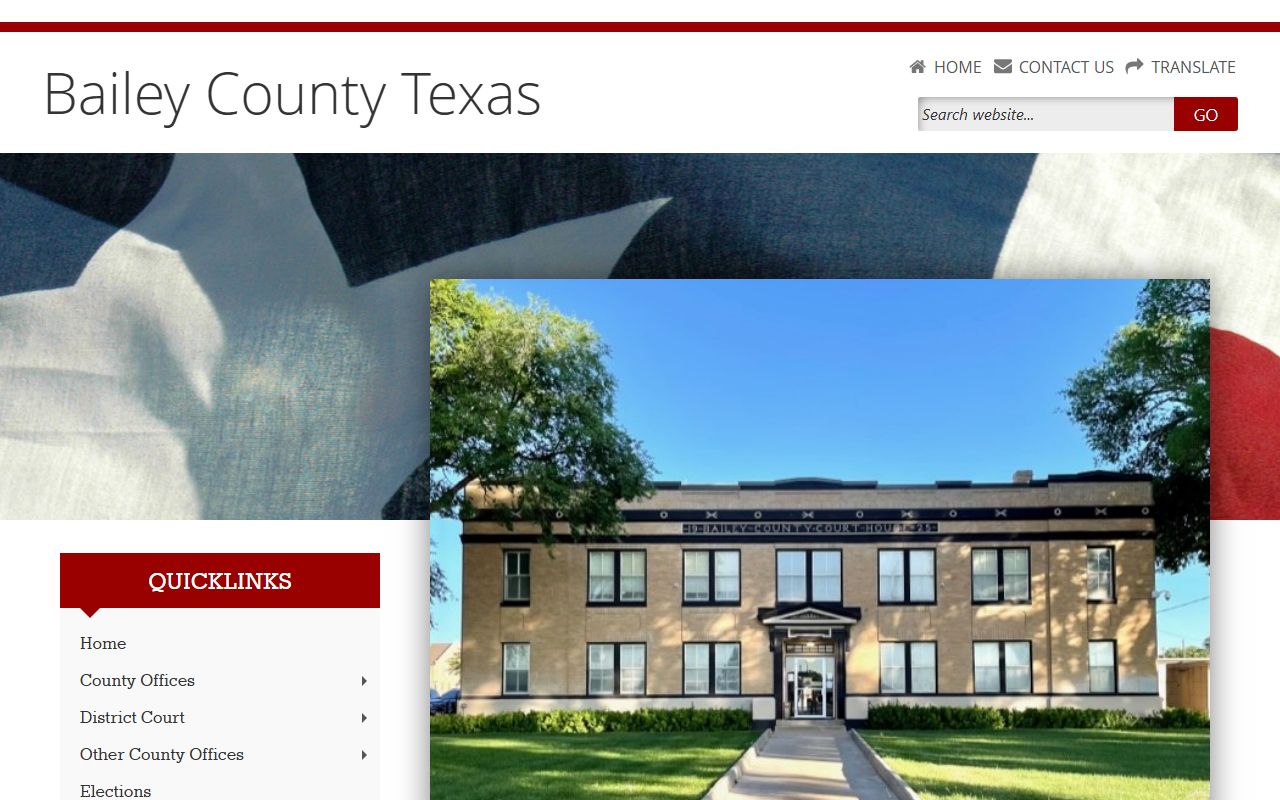
The Bailey County Clerk in Muleshoe is the official custodian of all real property records in the county. The clerk records and indexes instruments including warranty deeds, deeds of trust, lien notices and releases, oil and gas leases, easements, and subdivision plats. Each recorded document gets an instrument number and becomes part of the permanent public record. The clerk's office is located in the Bailey County Courthouse in Muleshoe.
The county's website at co.bailey.tx.us provides department contact information and links to county services. For online records access, the county uses a records management system that allows name searches and document viewing at no charge. Certified copies can be requested by visiting in person or mailing a request to the clerk's office.
| Office | Bailey County Clerk |
|---|---|
| Address | 300 S. First St., Muleshoe, TX 79347 |
| Phone | (806) 272-3044 |
| Hours | Monday through Friday, regular business hours |
| Website | co.bailey.tx.us |
The clerk's office indexes all recorded instruments by party name. Searching by grantor or grantee name is the primary method for locating documents tied to a specific person or entity.
How to Search Bailey County Property Records
You can search Bailey County property records online for free. The records management portal lets you search by grantor name (the party conveying the property), grantee name (the party receiving it), or by document type and date range. Once you find a document, you can view the image online. Instrument numbers and book and page references from earlier title searches also work as search criteria.
In-person searches are available at the clerk's office during business hours. Public terminals let you search the index yourself. Texas AG guidelines do not require the clerk's staff to conduct searches on your behalf, so come prepared to search on your own or bring a reference number. Title companies and abstract firms in the area offer professional search services if you need a complete chain of title for a real estate transaction.
You can also mail a written request for copies. Include the grantor or grantee name, the approximate recording date, or the instrument number if known. Include payment for estimated copy fees with your request. Allow several business days for the office to process and return your copies by mail.
Note: Online records may not include documents filed within the most recent few business days while indexing is in progress.
Types of Bailey County Property Records
The County Clerk files and maintains a wide range of instruments affecting real property in Bailey County. Under Texas Property Code Section 12.001, recording is necessary to give constructive notice to future buyers and lenders. Texas Property Code Section 13.001 makes a recorded instrument binding on all later parties whether or not they searched the records.
Documents you will find in Bailey County include warranty deeds for property transfers, deeds of trust for mortgages and loans, releases of lien when debts are paid off, mechanic's and materialman's liens from contractors, tax lien filings from the county and school districts, agricultural and farm loan documents, oil and gas leases, water rights assignments, easements and right-of-way documents, subdivision plats, and assumed name certificates. Given the agricultural character of Bailey County, farm and ranch deeds, irrigation rights documents, and USDA-related instruments are common in the records.
Plat maps on file with the clerk show the boundaries of recorded subdivisions in the county. If you are purchasing a lot in any platted area, check the recorded plat to confirm the exact lot dimensions and any restrictions or easements that appear on the face of the map.
Bailey County Appraisal District
The Bailey County Appraisal District appraises all taxable property in the county for local tax purposes. The CAD maintains a searchable database of property ownership, appraised values, and tax exemptions. This database is a useful complement to the clerk's deed records when you need to confirm current ownership or check the assessed value of a parcel.
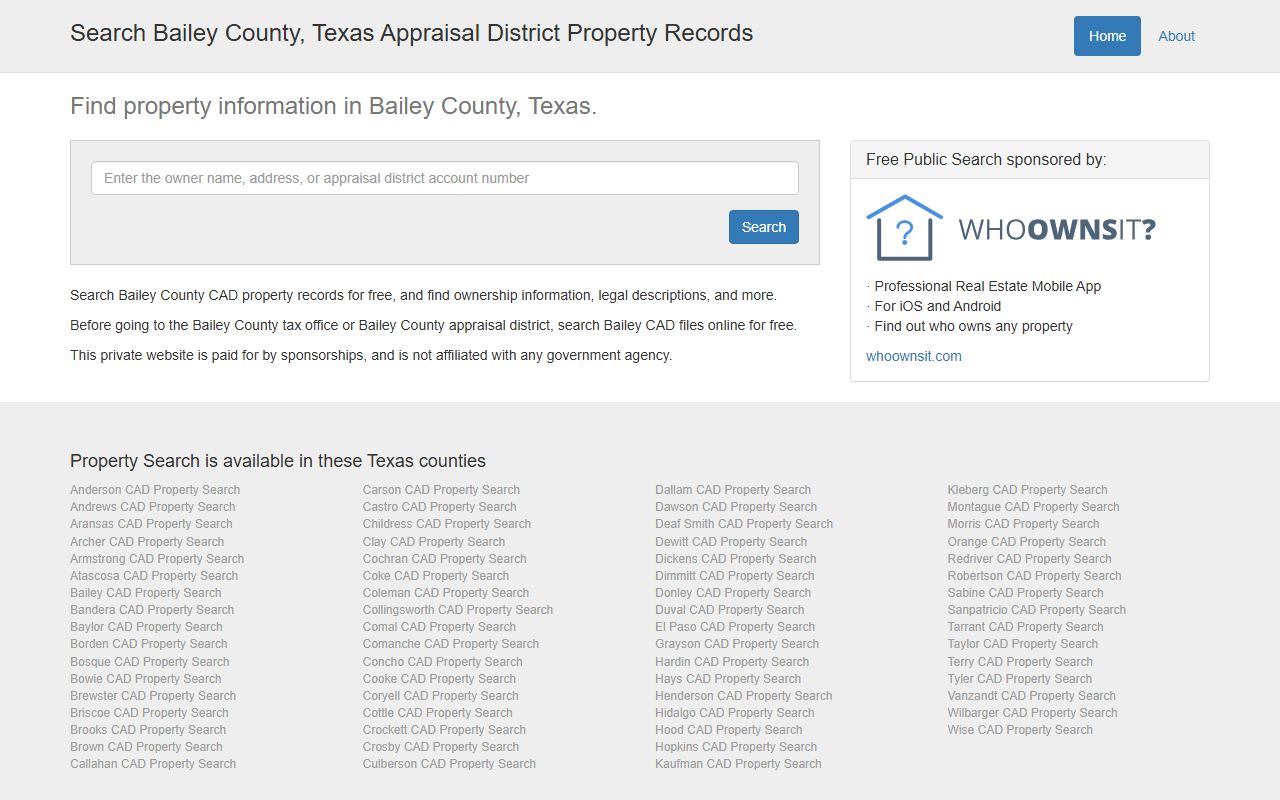
Search the CAD at baileycad.org by owner name, property address, or account number. Results include the appraised value, property description, exemptions, and the taxing entities that apply to the parcel. If you disagree with your assessed value, the CAD website has information on how to file a protest with the Appraisal Review Board before the annual deadline.
Bailey County's agricultural economy means the CAD handles many open-space and agricultural use exemptions. Productivity appraisals and agricultural exemptions reduce the taxable value of farm and ranch land. The CAD maintains records of these designations and can explain qualification requirements if you are seeking an ag exemption on Bailey County property.
Recording Fees and Procedures
Bailey County follows the standard Texas recording fee schedule. The cost to record a document is $26 for the first page. Each additional page costs $4.00. If more than five party names must be indexed, an extra $0.25 applies per name over five. These fees are the same regardless of the document type being recorded.
Documents may be submitted for recording in person at the courthouse in Muleshoe, by mail, or through an eRecording service. For mail submissions, include a check or money order made out to the Bailey County Clerk. eRecording through a service like Simplifile is faster and lets you track the status of your filing electronically. Most title companies and lenders prefer eRecording for its speed and reliability.
All documents must meet Texas formatting requirements. The first page needs a 3-inch margin at the top right for the clerk's recording stamp. All other margins must be at least 1 inch. Documents must include the names of all parties, a legal description of the property, and proper notarization of any required signatures. Documents that do not meet these requirements may be returned without recording.
Once recorded, the clerk assigns an instrument number and stamps the date. The original is returned to the submitting party, and the document is indexed in the public records.
Texas Public Information Act
All property records held by the Bailey County Clerk are public records. Under Texas Government Code Chapter 552, anyone may request and receive copies of government records without stating a reason. You do not need to be the property owner or have any stake in the transaction to access deed records, lien filings, or other instruments on file with the clerk.
The clerk must respond promptly to a public records request. If the records cannot be produced in ten business days, you must be notified of the delay. Most property records requests can be fulfilled quickly because the documents are already indexed and searchable. The Texas Attorney General's Open Government Division handles disputes about records access and can be contacted if a request is improperly denied.
Some personal information in documents available online is redacted. Social security numbers and financial account numbers are removed from images viewable through the online portal. The original paper records held by the clerk contain this information but may require an in-person request to access.
Additional Resources for Property Research
The Texas Comptroller's Property Tax Assistance Division provides resources for property owners statewide, including information on exemptions, protest procedures, and how local tax rates are set. Property in Bailey County is taxed by the county, local school districts, and any applicable special districts.
The Texas General Land Office holds historical land grant records including the original patents for Bailey County lands. The GLO archive is searchable online and is useful for tracing properties back to their original grants from the state of Texas. For research on older agricultural parcels, the GLO is often the best starting point for the earliest ownership documents.
The Texas Secretary of State's SOSDirect portal lets you search business entity records and UCC filings. When a deed or lien involves a business, partnership, or LLC, SOSDirect helps confirm the legal name and current status of that entity. UCC liens that attach to business property are also filed at the state level and searchable here.
The Texas State Law Library offers research guides on real property topics including recording requirements, title searches, easements, and Texas property law generally.
Nearby Counties
Bailey County is located in the Texas Panhandle. If a property is near a county border, confirm its location before searching records.