
Scurry County Property Records
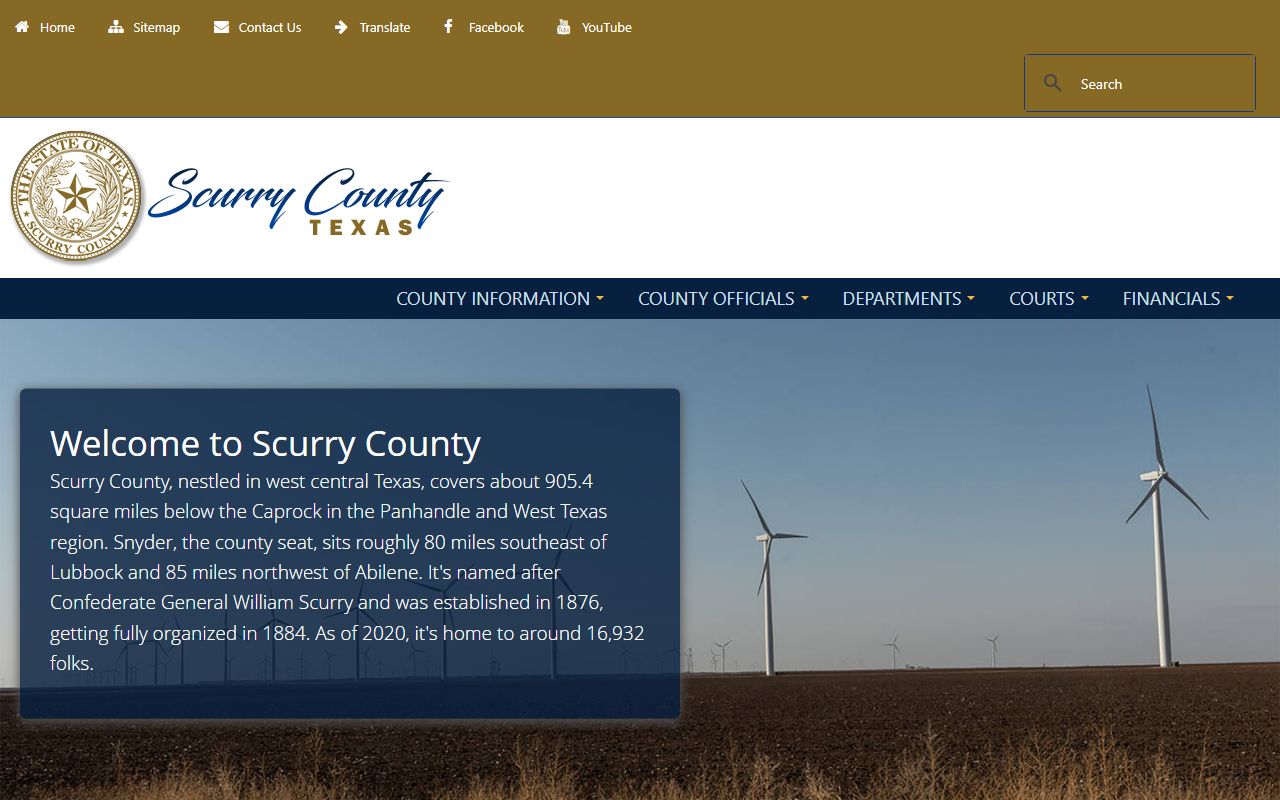
Scurry County property records are filed with the County Clerk in Snyder, Texas. The clerk's office maintains deeds, liens, oil and gas leases, mineral deeds, and other land instruments dating back to 1883 when the county was formed. You can search records online through the county's EagleWeb portal or use TexasFile as a third-party option. This guide covers how to find what you need, who to contact, and what to expect when searching Scurry County property records.
Scurry County Overview
Scurry County Clerk Office
The Scurry County Clerk is the official record keeper for all land documents in the county. County Clerk Melody Appleton maintains the office at 1806 25th Street, Suite 300 in Snyder. Staff handle deed recording, lien filings, oil and gas lease documents, UCC filings, and assumed name certificates. All instruments affecting real property in Scurry County must be filed here to provide legal notice under Texas law.
The office is open Monday through Friday from 8:00 AM to 12:00 PM and 1:00 PM to 4:30 PM. The lunch closure is a firm break, so plan visits accordingly. Records go back to 1883, the year Scurry County was organized. The EagleWeb online search system allows free index searches and PDF downloads of recorded documents.
| County Clerk | Melody Appleton |
|---|---|
| Address | 1806 25th Street, Suite 300, Snyder, TX 79549 |
| Phone | (325) 573-5332 |
| Fax | (325) 573-7396 |
| Hours | Monday-Friday 8:00 AM-12:00 PM, 1:00 PM-4:30 PM |
To search online, go to the Scurry County EagleWeb portal. You can search by grantor or grantee name, document type, date range, book and page number, or instrument number. Results include document details and PDF images. TexasFile is also available as an alternative search option with subscription access to document images.
Search Scurry County Property Records
The EagleWeb system is the primary online tool for searching Scurry County property records. It is free to use for index searches, and PDF downloads are available directly from the portal without requiring a paid account.
To run a name search, go to recorder.co.scurry.tx.us and enter the grantor name (the person transferring property) or grantee name (the person receiving it). You can also filter by document type to narrow results. The system covers records from 1883 through the present, so the full range of county history is accessible online. If you prefer, instrument number and book-and-page searches also work in the portal.
For in-person searches, visit Suite 300 at 1806 25th Street during business hours. You are expected to conduct your own searches using the public terminals. Under AG Opinion WW-607, the clerk's staff is not required to perform record searches for the public. If you need help navigating the system, staff can point you in the right direction but cannot do the research for you.
Note: Photo ID is required when recording documents that convey property under HB 16. The clerk copies or records the ID information at the time of recording.
Types of Property Records in Scurry County
Scurry County sits within the Permian Basin, so oil and gas records make up a large share of the instruments filed with the clerk. Mineral deeds, oil and gas leases, pooling agreements, and pipeline easements are all common document types here alongside the usual real property records. Under Texas Property Code Section 12.001, all instruments affecting land must be recorded to give legal notice to third parties.
Common property record types filed in Scurry County include warranty deeds, special warranty deeds, quitclaim deeds, deeds of trust, mortgage releases, mechanic's liens, judgment liens, tax lien filings, oil and gas leases, mineral deeds, pipeline easements, right-of-way agreements, UCC filings, assumed name certificates, and plat maps. Each document is assigned an instrument number and indexed under all party names.
Plat maps are stored alongside deed records. If you are researching a subdivision lot, the plat will show lot lines and easements. The clerk's office keeps the original plat maps as well as digital images. Copies can be requested for a per-page fee.
Scurry County Appraisal District
The Scurry County Appraisal District maintains tax appraisal records for all property in the county. These records are separate from the deed records at the County Clerk's office but are useful for checking current ownership, appraised values, exemptions, and property characteristics. You can contact the appraisal district for property valuation questions and account information.
The Tax Assessor-Collector for Scurry County is Jana Young, located at 1806 25th Street, Suite 103, Snyder, TX 79549. The tax office can be reached at (325) 573-9316 and handles property tax payments, vehicle registration, and truth-in-taxation information. The Scurry County tax portal lets you search and pay taxes online.
Appraisal and deed records work together when you are researching a property. The CAD shows current ownership on the tax rolls, while the clerk's deed records show the full chain of title. Both are worth checking if you are doing due diligence on a land purchase.
Recording Fees and Procedures
Recording a document with the Scurry County Clerk costs $26 for the first page and $4 for each additional page. If a document names more than five parties to be indexed, an extra $0.25 applies for each name over five. These fees are standard across most Texas counties and are set by state statute.
You can record documents in person at Suite 300, by mail, or through an eRecording service. Mail submissions should include a check payable to the County Clerk with a return-addressed stamped envelope so the clerk can send back the original after recording. eRecording vendors like Simplifile and CSC work with Scurry County and allow electronic submission and return.
Once recorded, the document gets an instrument number and a recording stamp with the date and time. It is then indexed and made available in the EagleWeb system, typically within a few days. Certified copies cost $5.00 plus $1.00 per page. Plain uncertified copies are less expensive and work fine for most title research purposes.
Texas Public Information Act
Scurry County property records are public under Texas Government Code Chapter 552, the Public Information Act. You do not need to own the property or be a party to any document to access these records. Anyone can request copies, and no reason is required.
The clerk's office must respond to public records requests promptly. If producing the records will take more than ten business days, the office must notify you of the timeline. Since most property records are already indexed and online, you can often find what you need without filing a formal request. For records not yet online or older instruments not in the digital system, a written request to the clerk is the right approach. The Texas Attorney General's Open Government Division handles disputes over public records access.
Some personal information within recorded documents may be redacted in online images. Social security numbers and financial account numbers must be removed from publicly viewable images under state law. The original paper records held by the clerk contain the full information.
Additional Resources for Scurry County Research
Beyond the clerk and appraisal district, several other sources support Scurry County property research. The Texas Comptroller's Property Tax Assistance Division publishes statewide data on appraisal districts, exemption forms, and protest procedures. Texas has no state property tax, but local taxing entities in Scurry County levy rates on real and personal property.
For historical land research, the Texas General Land Office holds over 800,000 historical land grant records. Scurry County land originates from early Texas land grants, and those original records are searchable through the GLO archive. If you are tracing a property back to the 1800s, the GLO is a good starting point before moving to the county clerk records.
The Texas Secretary of State's SOSDirect system provides business entity records and UCC filings at the state level. If a lien involves a business, you can verify the entity's name and status through SOS. The Texas State Law Library offers free research guides on recording requirements, easements, and other Texas property law topics.
Nearby Counties
Scurry County borders several West Texas counties. If a property is near a county line, confirm the correct county before searching records.