
Moore County Property Records
Moore County property records are kept by the County Clerk in Dumas, Texas. The office records and maintains all instruments affecting real property in the county, including deeds, liens, mortgages, and plat maps. If you need to look up ownership, check for outstanding liens, or find a recorded document for a parcel in Moore County, the County Clerk and its search tools are where you start. This guide explains how the system works and what resources are available to you.
Moore County Overview
Moore County Clerk Office
The Moore County Clerk in Dumas is the official custodian of all real property records for the county. The office records deeds, deeds of trust, liens, lien releases, plat maps, oil and gas leases, and all other instruments affecting real property in Moore County. Every document is assigned an instrument number and indexed by party name. The records are open to the public and can be accessed in person or through online search tools.
The Moore County Courthouse is in Dumas. You can visit the clerk's office there during regular business hours to search records in person. The clerk accepts documents for recording in person, by mail, and through eRecording services. The county also has an online search portal that lets you access recorded instruments from home. Online access is free for basic name searches.
| Office | Moore County Clerk |
|---|---|
| Address | 715 Dumas Ave, Dumas, TX 79029 |
| Phone | (806) 935-5588 |
| Hours | Monday through Friday, regular business hours |
| Website | co.moore.tx.us |
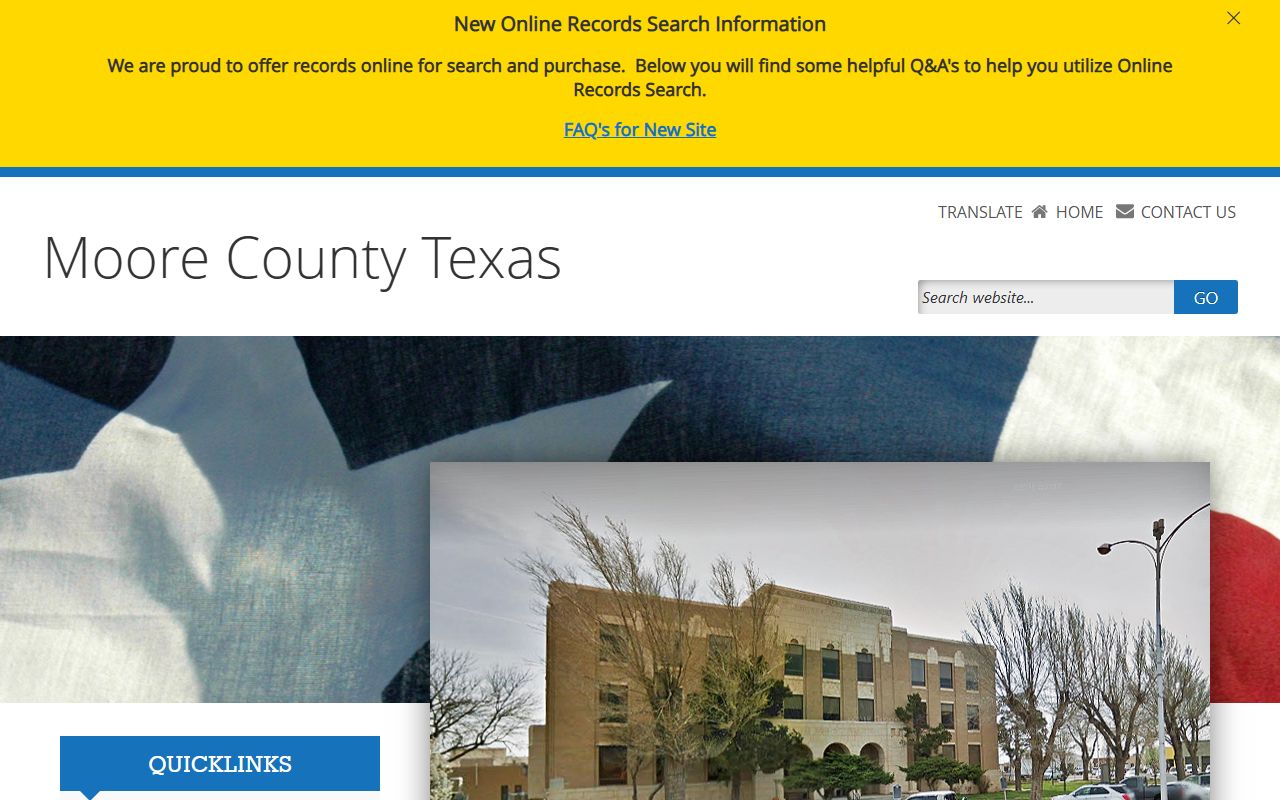
Third-party search services like TexasFile provide online access to Moore County deed records and other filed instruments. You can search by grantor or grantee name, document type, or recording date. Document images are often available online. For the most recent filings or for older historical records, contact the clerk's office directly.
Search Moore County Property Records
The clerk's deed index is organized by party name. To find a recorded deed, start with the grantor name (the person or entity that transferred the property) or the grantee name (the person who received it). If you have an instrument number from a prior search, you can use that to pull up the exact document. Book-and-page references from older records also work in the historical index.
For online searches, use the Moore County Clerk's portal or a third-party vendor like TexasFile. Enter the owner's name or the property address. Results show the document type, recording date, and parties involved. Most records include images of the documents. For very recent filings, call the clerk's office to confirm the instrument is indexed and available.
In-person searches at the Dumas courthouse are an option if you want to go through the original index books or need help navigating older records. Staff can guide you but do not search on your behalf. Title companies and abstract firms that work in the Texas Panhandle can also conduct searches and produce title reports for Moore County properties.
Types of Property Records in Moore County
The County Clerk records all instruments affecting land in Moore County. Common types include warranty deeds, quitclaim deeds, special warranty deeds, deeds of trust, mortgages, mechanic's liens, materialman's liens, lien releases, oil and gas leases, agricultural leases, easements, right-of-way agreements, and subdivision plat maps. Under Texas Property Code Section 12.001, recording gives legal notice to all future buyers and lenders.
Oil and gas leases are a significant part of the recording volume in Moore County. The county sits in the Texas Panhandle, which has a long history of energy production. Mineral rights are frequently leased here, and those leases are recorded to establish the terms between landowners and operators. If you are buying property in Moore County, check for oil and gas filings to understand what mineral interests may have been leased separately from the surface estate.
Plat maps for new subdivisions and agricultural subdivisions are also filed here. These maps show lot lines, easements, and dedications. The clerk keeps the originals on file. You can get copies for a fee.
Moore County Appraisal District
The Moore County Appraisal District maintains the tax appraisal records for all property in the county. The CAD database shows current ownership on the tax rolls, the appraised value, any exemptions, and property characteristics. Online property search at moorecad.com lets you look up parcels by owner name, address, or account number for free.

If your appraised value seems too high, file a protest by the May 15 deadline. The CAD website has protest forms and instructions. The district can also provide information on exemptions including homestead, over-65, and disability exemptions. Chief Appraiser information and board contacts are available on the CAD website.
Keep in mind that CAD ownership records lag behind actual deed transfers. If a property sold recently, the CAD may still show the prior owner. Always verify current ownership through the County Clerk's deed records for the most accurate information.
Recording Fees and Procedures
Recording a document with the Moore County Clerk costs $26 for the first page and $4.00 for each additional page. This fee schedule follows Texas Local Government Code Section 118.011 and applies across most Texas counties. Documents naming more than five parties carry an extra $0.25 charge per additional name beyond five.
You can submit documents in person, by mail, or through eRecording. Mail submissions need a check or money order payable to the Moore County Clerk and a self-addressed return envelope or return address. eRecording handles electronic submission and return, which is the standard method used by lenders and title companies. Major vendors like Simplifile connect with Moore County for eRecording services.
Once recorded, the document receives a permanent instrument number and a stamp showing the recording date and time. The clerk returns the original to the submitting party. Certified copies are $1.00 per page plus a $5.00 certification fee. Uncertified plain copies are available for less.
Texas Public Information Act
Property records in Moore County are public documents. Under Texas Government Code Chapter 552, anyone can request copies of government records without giving a reason. This right applies to deed records, lien filings, plat maps, and all other recorded instruments at the County Clerk's office.
The clerk must respond promptly. If producing records will take more than ten business days, the office must let you know when to expect them. Most property records are ready quickly because they are already indexed. If you have trouble getting access, the Texas Attorney General's Open Government Division handles disputes and publishes guidance on your rights. Some personal information in documents is redacted from online images under Texas Property Code Section 11.008, but the originals stay on file at the clerk's office.
Additional Resources
The Texas Comptroller's Property Tax Assistance Division provides statewide information on exemptions, appraisal processes, and tax rates. For historical land research, the Texas General Land Office holds original Texas land grant records. The Texas Secretary of State's SOSDirect covers business entities and UCC filings. The Texas State Law Library offers free property law research guides covering recording requirements, title issues, and lien research applicable to Moore County.
Nearby Counties
Moore County is in the Texas Panhandle. If a property is near a county border, check which county it falls in before pulling records.