
Hill County Property Records
Hill County property records are filed and maintained by the County Clerk in Hillsboro, Texas. The clerk's office holds deeds, liens, mortgages, releases, and other land documents for all real property in the county. If you need to search ownership history, check for active liens, or find a filed deed, you can start with the official county search portal. This guide covers where records are kept, how to search them, what they cost to copy, and what other sources are available for property research in Hill County.
Hill County Overview
Hill County Clerk Office
The Hill County Clerk is the official keeper of all property records in the county. The office records deeds, deeds of trust, liens, lien releases, easements, plat maps, oil and gas leases, and other instruments that affect title to land in Hill County. Once a document is filed and indexed, it becomes part of the permanent public record and is accessible to anyone who wants to search it.
The clerk's office is located at the Hill County Courthouse in Hillsboro. Staff maintain the official index and can assist you in locating records, though they do not conduct searches on behalf of requestors. Online access is available through the county's official portal for current records. If you need documents going back further in time, some older records may require an in-person visit or a written request.
| Office | Hill County Clerk |
|---|---|
| Address | Hill County Courthouse, Hillsboro, TX 76645 |
| Phone | (254) 582-4030 |
| Website | co.hill.tx.us |
| Hours | Monday through Friday, regular business hours |
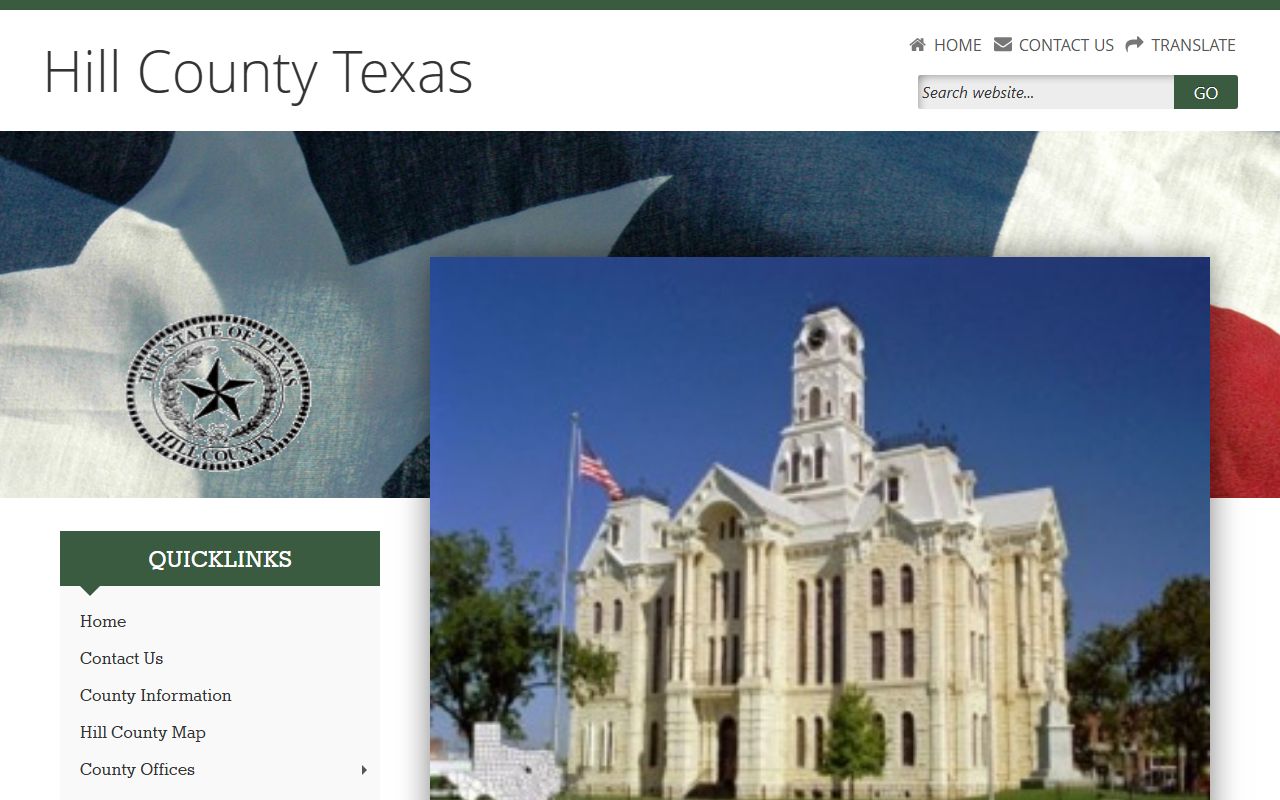
The online search portal lets you look up documents by grantor or grantee name, document type, date range, or instrument number. Results include document details and images for most current records. Third-party services like TexasFile also index Hill County records if you prefer a different search interface.
How to Search Hill County Property Records
Searching Hill County property records starts with the County Clerk's official index. You can search by party name (grantor or grantee), document type, recording date, or instrument number. The grantor is the party giving or transferring an interest in land. The grantee is the party receiving it. Most deed searches start with the grantee name to trace ownership forward in time.
For in-person searches, visit the clerk's office at the Hill County Courthouse during normal business hours. Staff will point you to the indexes, but the search itself is your responsibility under Texas law. You can also hire a title company or abstractor to conduct a full chain-of-title search if you need a certified result for a real estate transaction or legal proceeding.
Note: Some older Hill County records may not be in the online system and may require an in-person visit to access original index books.
Types of Property Records in Hill County
The Hill County Clerk records a wide range of documents that affect real property. Under Texas Property Code Section 12.001, instruments affecting title to real property must be recorded to provide constructive notice to the public. Once filed, a document is legally considered known to anyone who later deals with that land.
Common property records filed in Hill County include warranty deeds, special warranty deeds, quitclaim deeds, deeds of trust, mechanic's liens, materialman's liens, federal and state tax liens, lien releases, easements, rights-of-way, oil and gas leases, plat maps, subdivision replats, assumed name certificates, and UCC financing statements. Each document gets a unique instrument number and is indexed by party names.
Plat maps are important for any property in a recorded subdivision. They show lot dimensions, street layouts, drainage easements, and building lines. The clerk's office holds the original recorded plats and can provide copies for a standard copy fee.
Hill County Appraisal District
The Hill County Appraisal District maintains appraisal records for all taxable property in the county. These records are separate from the County Clerk's deed records but are essential for understanding current ownership, assessed values, exemptions, and property characteristics. The CAD updates ownership information based on recorded deeds, though there may be a lag of a few months after a recent sale.
You can search the appraisal district database at hillcad.org by owner name, property address, or account number. Results show appraised value, taxing entity rates, ownership name, and legal description. If you believe your appraised value is incorrect, you can file a protest with the Appraisal Review Board. The protest deadline is typically May 15 each year. The appraisal district office is located in Hillsboro and is open Monday through Friday.
Using both the CAD records and the County Clerk's deed records together gives you the most complete picture of a property's current status, tax obligations, and ownership history.
Recording Fees in Hill County
Recording a document with the Hill County Clerk costs $26 for the first page. Each additional page is $4.00. These fees are set by the Texas Legislature and apply to most Texas counties. If a document names more than five parties requiring indexing, there is an additional charge of $0.25 per name beyond five.
You can submit documents for recording in person, by mail, or through an eRecording vendor. Mail submissions must include a check or money order payable to the Hill County Clerk. eRecording is faster and lets authorized vendors submit and receive documents electronically. Services like Simplifile, CSC, and eRecording Partners work with most Texas county clerks. Once a document is recorded, the clerk returns the original with the recording information stamped on it.
Certified copies of recorded documents cost $1.00 per page plus a $5.00 certification fee. Plain uncertified copies are available at a lower cost. For most property research purposes, uncertified copies are sufficient. Request a certified copy only when required by a court, lender, or government agency.
Texas Public Information Act
Hill County property records are public documents. Under Texas Government Code Chapter 552, the Public Information Act, any person can request copies of government records without giving a reason. You do not need to own the property or be a party to the document to access it.
The clerk's office must respond to your request promptly. If producing the records will take more than ten business days, the office must notify you of the expected delay. Most property records are available quickly because they are already indexed. The Texas Attorney General's Open Government Division handles disputes about public record access and publishes guidance on requestor rights. Under Texas Property Code Section 11.008, certain personal identifiers such as social security numbers must be redacted from online document images.
Additional Resources for Hill County Research
The Texas Comptroller's Property Tax Assistance Division offers statewide resources including exemption forms, appraisal dispute guides, and tax rate data. Texas does not have a state property tax, but local taxing entities in Hill County set rates that apply to all taxable property in the county.
For historical land research going back to the Republic of Texas era, the Texas General Land Office maintains over 800,000 historical land grant records. If you are tracing the origin of a Hill County land parcel, the GLO archive can show the original patent and surveying information. The Texas Secretary of State's SOSDirect system is useful for looking up UCC liens and business entity records that may affect property interests. The Texas State Law Library offers online research guides covering recording requirements, easements, and other Texas property law topics.
Nearby Counties
Make sure you are searching in the right county. Hill County borders several other Texas counties. If the property you are looking up is near a county line, confirm the correct county before you search.