
Dawson County Property Records
Dawson County property records are maintained by the County Clerk in Lamesa, Texas. The office records and indexes deeds, liens, oil and gas leases, and other land instruments for all real property in this South Plains county. If you need to search ownership history, check for recorded liens, or get a copy of a deed or mortgage document, the County Clerk is the right starting point. This guide explains how the Dawson County system works and what resources are available.
Dawson County Overview
Dawson County Clerk Office
The Dawson County Clerk is the official record keeper for all land documents filed in the county. The office is in the courthouse in Lamesa and handles recording, indexing, and public access for property instruments including deeds, deeds of trust, lien notices and releases, oil and gas leases, easements, and plat maps. Dawson County is an agricultural and oil-producing area on the South Plains, and both types of activity generate a steady stream of land-related recordings.
Documents are indexed by grantor and grantee name following the standard Texas system. You can search by party name, instrument type, or recording date. Once a document is recorded, it receives an instrument number that can be used to pull it up directly in the index.
| Address | 400 S. 1st St., Lamesa, TX 79331 |
|---|---|
| Phone | (806) 872-3778 |
| Hours | Monday through Friday, regular business hours |
| Website | co.dawson.tx.us |
For certified copies of recorded documents, contact the clerk's office by phone or mail. You can also visit in person during business hours. Staff can help you understand the index and locate records but cannot conduct the title search on your behalf.
Searching Dawson County Property Records
The Dawson County Clerk maintains the official index for all land records filed in the county. Online search access is available for recent records through the county's portal.
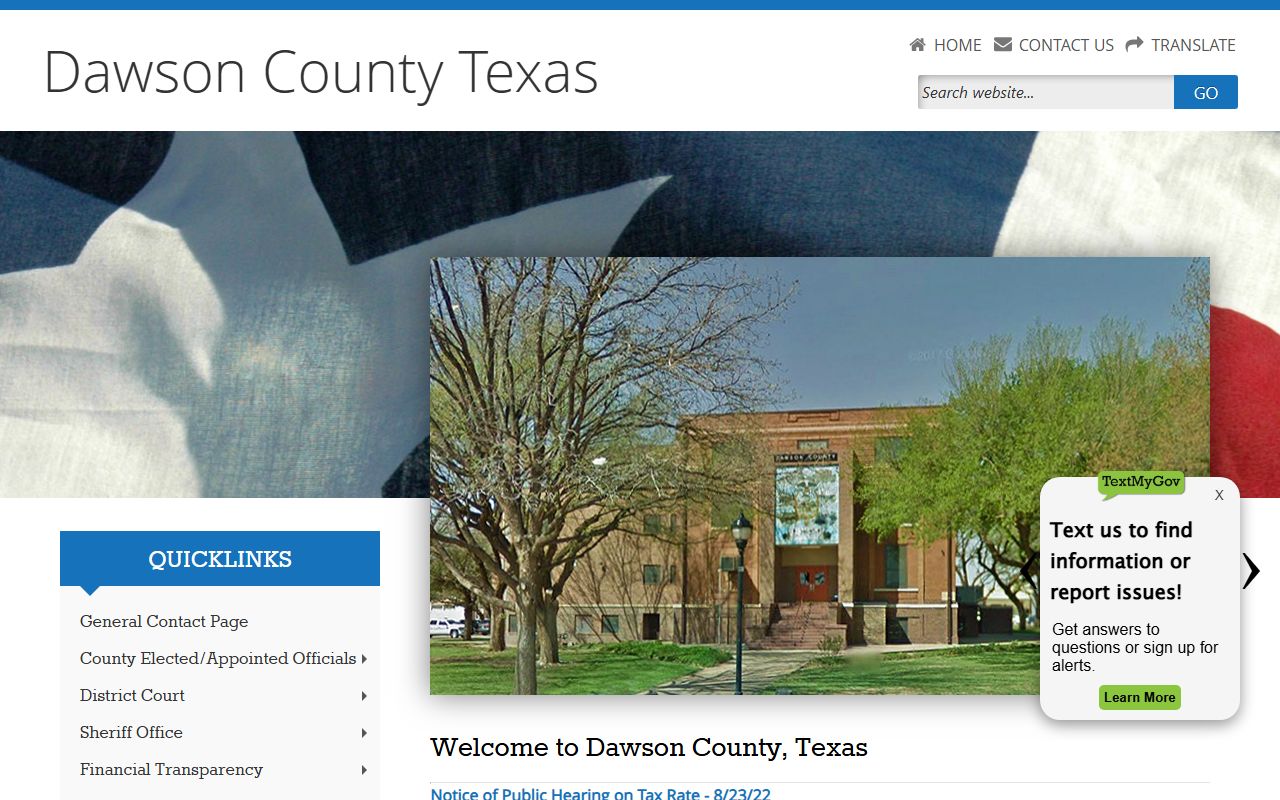
For in-person searches, visit the courthouse in Lamesa during business hours. The index is searchable by grantor or grantee name. Bring the property's legal description or address if you have it. For older records that predate digital indexing, the clerk's paper index books may be required. Staff can point you to the right time period.
The Dawson County Appraisal District is a good companion resource. Searching the CAD by owner name gives you the account number and legal description, which you can then use to search the clerk's deed index more efficiently.
Note: If the property is near the Lubbock County line, confirm it is within Dawson County before searching here.
Property Record Types in Dawson County
The Dawson County Clerk records all instruments that affect interests in real property within the county. Under Texas Property Code Section 12.001, recorded documents serve as constructive notice to the public. Any later buyer or lender is treated as having notice of what is on file, even if they did not check.
Common Dawson County property record types include warranty deeds, special warranty deeds, quitclaim deeds, deeds of trust, mechanic's and materialman's liens, lien releases, oil and gas leases, pipeline right-of-way agreements, agricultural use agreements, and federal tax lien filings. Because Dawson County has significant oil and gas production alongside cotton farming, both mineral and surface-related documents appear frequently in the records. Subdivision plats for any platted areas in and around Lamesa are also on file with the clerk.
Dawson County Appraisal District
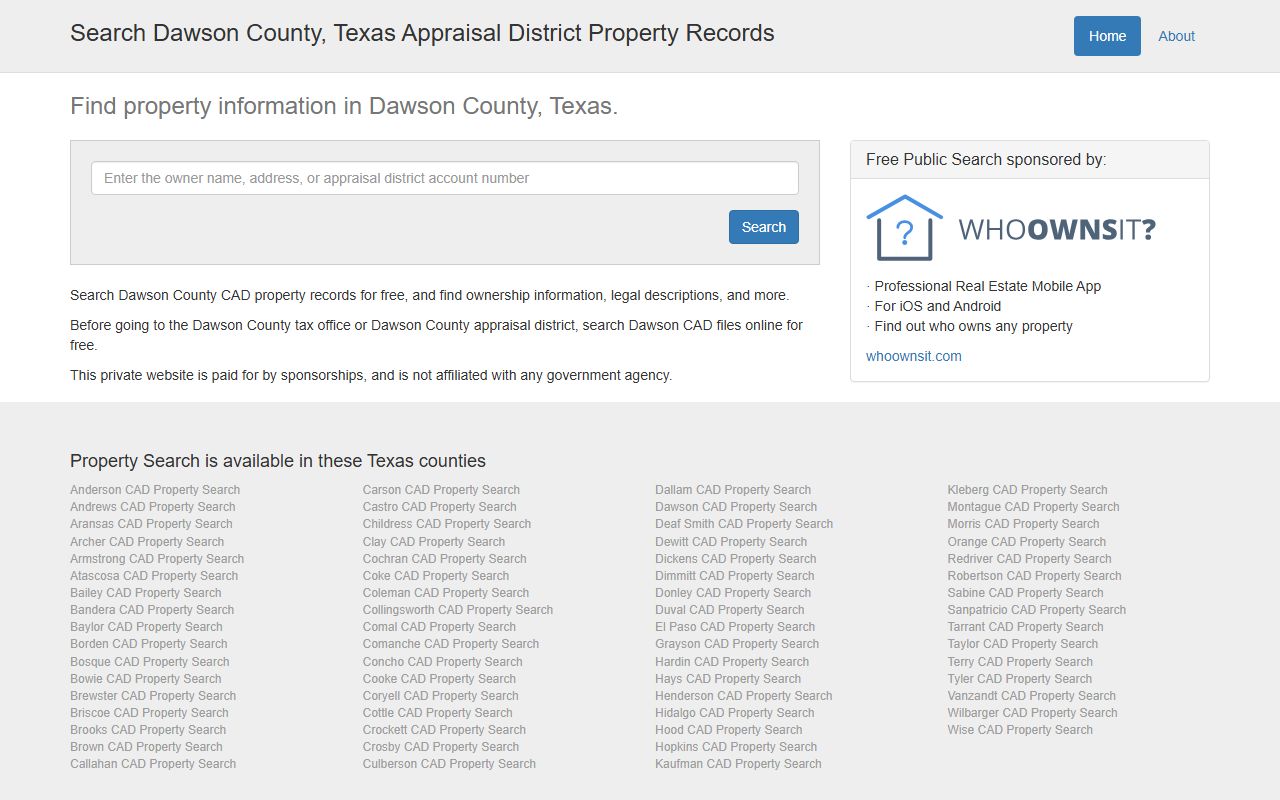
The Dawson County Appraisal District maintains tax appraisal records for all taxable property in the county. The CAD database is searchable online at dawsoncad.com by owner name, property address, or account number. Search results show current ownership, assessed value, legal description, and any exemptions on file.
Agricultural use valuations are common for farm tracts in Dawson County. These designations appear in the CAD records and can significantly lower the tax burden on qualifying land. The appraisal district updates ownership rolls based on deed filings at the clerk's office but may lag by several months after a sale. For current title information, the deed records at the County Clerk are the authoritative source.
Recording Fees and Procedures
The Dawson County Clerk charges $26 for the first page of a recorded instrument and $4 per additional page. These fees are set by state law. When more than five names are indexed in a single document, an additional $0.25 per name applies.
Documents can be filed in person at the courthouse, by mail, or through eRecording services if the county participates. Mail filings should include a check payable to the Dawson County Clerk along with a self-addressed return envelope. The clerk records the document, stamps the instrument number and date, and mails the original back. After recording, documents are indexed and made accessible through the public search system, typically within a few business days.
Certified copies cost $1.00 per page plus a $5.00 certification fee. Uncertified copies are cheaper and are acceptable for most due diligence purposes. Contact the clerk's office to confirm current fees before submitting a mail copy request.
Texas Public Information Act
Dawson County property records are public documents. Under Texas Government Code Chapter 552, any person can request access to these records without giving a reason. The clerk's office must respond without unreasonable delay. For indexed records already in the system, access is generally immediate. Older documents may require a short wait while staff retrieves the records.
The Texas Attorney General's Open Government Division handles disputes and publishes guidance on public records access rights. Certain personal data like social security numbers is redacted from online document images under Texas law but remains in the original paper records at the clerk's office.
Additional Property Research Resources
The Texas Comptroller's Property Tax Assistance Division provides statewide information on agricultural exemptions, appraisal protest rights, and tax rate data. For Dawson County farm operators, the agricultural use valuation rules are especially relevant. The Texas General Land Office holds historical land grant records relevant to the South Plains region. The Texas Secretary of State's SOSDirect is useful for researching business entities involved in property transactions or lien filings. The Texas State Law Library offers research guides on Texas real property topics.
Nearby Counties
Dawson County is on the South Plains and borders several neighboring counties. Verify the correct county when searching for properties near county lines.