
Find Property Records in Colorado County
Colorado County property records are filed and maintained by the County Clerk in Columbus, Texas. Deeds, liens, mortgages, easements, and other land instruments are recorded here and are open to the public. The office has been keeping records since the county's earliest days, and many documents are now searchable online. If you need to research a property in Colorado County, this page covers your main options and how the system works.
Colorado County Overview
Colorado County Clerk Office
The Colorado County Clerk is the official custodian of all property records in the county. The office records and indexes deeds, deeds of trust, mortgage releases, mechanic's liens, tax liens, easements, oil and gas leases, plat maps, and other real property instruments. Every filed document becomes part of the permanent public record and is indexed by party name.
The clerk's office is in Columbus at the county courthouse. Staff are available Monday through Friday during regular business hours. The office handles both recording and retrieval. If you need a certified copy of a recorded document, you can request it in person or by mail. Staff can help you navigate the filing system but cannot conduct searches on your behalf or provide legal advice.
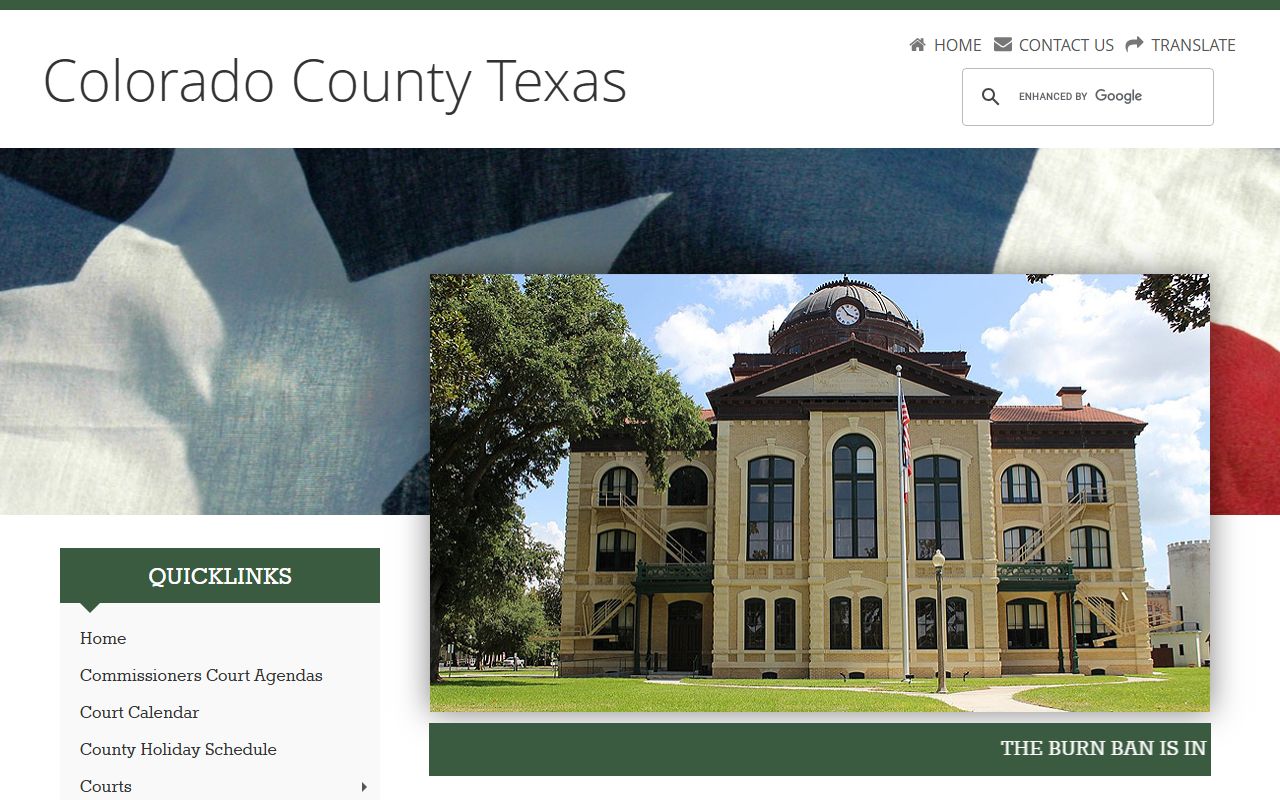
| Office | Colorado County Clerk |
|---|---|
| Address | Colorado County Courthouse, Columbus, TX 78934 |
| Hours | Monday through Friday, regular business hours |
| Website | co.colorado.tx.us |
Online property record searches are available through the clerk's portal. You can search by grantor or grantee name, document type, date range, or instrument number. Results show document details and links to images where available. For in-person searches at the Columbus courthouse, public terminals are typically available during business hours.
Searching Colorado County Property Records
Start your search at the County Clerk's online system. Use a name search to find all documents associated with a person or business. The grantor index lists people who gave or transferred property. The grantee index lists those who received it. Both are searchable online. If you know the instrument number or recording date, use those to pull up a specific document quickly.
For older records, the digital system may not cover all dates. If your search goes back several decades, an in-person visit to the courthouse in Columbus may be necessary. Staff can point you to the right index books. For full chain-of-title research, a title company or licensed abstractor familiar with Colorado County is the best resource. They have access to the full set of indexes and can trace ownership back through multiple conveyances.
Third-party research tools like TexasFile may index some Colorado County records and can serve as a secondary search option. Always verify results against the clerk's official records.
Note: Colum bus sits on major transportation routes and has seen consistent real estate activity, so the record volume is substantial even for a mid-size county.
Types of Colorado County Property Documents
The County Clerk records all instruments that affect real property in Colorado County. Under Texas Property Code Section 12.001, recording a document gives legal notice to third parties. The range of document types is broad and covers the full lifecycle of a property's legal history.
Common record types include warranty deeds, special warranty deeds, quitclaim deeds, deeds of trust, deed of trust releases, mechanic's and materialman's liens, federal and state tax liens, lien releases, oil and gas leases, pipeline and utility easements, agricultural leases, mineral deeds, surface use agreements, right-of-way documents, subdivision plats, and assumed name certificates. Oil and gas leases are common given the mineral activity in the area.
Plat maps record how land has been divided into lots and tracts. They show lot lines, streets, easements, and drainage areas. Once filed with the clerk, a plat becomes the legal basis for the lot descriptions used in all subsequent deeds for that subdivision. Copies of plat maps can be requested from the clerk's office.
Colorado County Appraisal District
The Colorado County Appraisal District maintains property appraisal and ownership records for all taxable property in the county. The CAD database is separate from the deed records at the clerk's office but complements them for property research. You can search by owner name, address, or account number to find current ownership, appraised value, exemptions, and property characteristics.
If you disagree with your appraised value, you can file a protest with the Appraisal Review Board. The deadline is May 15 or 30 days after your notice of appraised value, whichever is later. Exemption applications including homestead, over-65, and disability exemptions can be submitted through the appraisal district. The Texas Comptroller's Property Tax Assistance Division provides additional forms and guidance on exemptions and protests.
Note: CAD records can lag behind recent deed recordings by several months. For the most current ownership, check the County Clerk's deed records directly.
Recording Fees and Filing Options
The fee to record a document with the Colorado County Clerk is $26 for the first page and $4.00 for each additional page. If a document names more than five parties to be indexed, the fee is $0.25 per name over five. State law sets these fees, and they are consistent across most Texas counties.
You can record documents in person at the courthouse or by mail. Mail submissions should include a check or money order payable to the County Clerk and a self-addressed stamped envelope for return of the original. eRecording through authorized vendors is an option for title companies and lenders who file frequently. Once accepted, a document gets a unique instrument number and is stamped with the recording date. The clerk returns the original and then indexes the document for public access.
Certified copies cost $5.00 plus $1.00 per page. Uncertified copies cost less. For routine title research, uncertified copies are usually sufficient. Request certified copies when needed for court or government agency submission.
Texas Public Information Act
All property records in Colorado County are public documents. Under Texas Government Code Chapter 552, the Public Information Act gives anyone the right to request government records without stating a purpose. You don't need to own the property or be involved in the transaction to access these records.
The clerk must respond promptly. If it will take longer than ten business days, the office must notify you of the expected timeline. Records that are already indexed and online are typically available quickly. The Texas Attorney General's Open Government Division handles complaints about record access and provides free guidance on public information rights.
Some personal information is redacted from online document images under Texas Property Code Section 11.008(k)(1-2). Social security numbers and financial account numbers are removed from online scans, but the original paper documents remain complete at the clerk's office.
Additional Property Research Resources
The Texas General Land Office holds historical land grant records for Colorado County dating back to Spanish land grants and early Republic of Texas surveys. If you are researching a property with deep historical roots, the GLO database is a strong resource. Records include field notes, patent documents, and survey correspondence.
The Texas Secretary of State's SOSDirect system provides access to business entity records and UCC filings at the state level. If a lien or encumbrance involves a business entity, SOS records can help confirm the entity's legal name and current standing. The Texas State Law Library offers free research guides on property law topics that are useful for both researchers and property owners dealing with title issues.
Nearby Counties
Make sure you are searching the right county. Colorado County borders several counties in the Texas coastal plain region.