
Cameron County Property Records
Cameron County property records are kept by the County Clerk in Brownsville and cover deeds, liens, mortgages, plat maps, and other recorded instruments going back to 1848. You can search them online through the county's official portal or visit the office in person to get copies. The Cameron County Appraisal District maintains ownership and value data for all taxable parcels in the county, which sits at the southern tip of Texas along the Rio Grande and Gulf Coast.
Cameron County Overview
Cameron County Clerk
The Cameron County Clerk's office is the official keeper of all real property records in the county. The office records deeds, deeds of trust, mortgages, liens, releases, plat maps, assumed name certificates, and UCC filings. Records date back to 1848 when the county was first organized. The main office is located at 964 E Harrison St, Brownsville, TX 78520.
The Cameron County Clerk accepts documents for recording in person and through authorized e-recording vendors. Staff can help you look up a record by name, document type, instrument number, or date range. They cannot give legal advice, but they can point you to the right index. Birth and death certificates from 1903 forward and marriage licenses from 1848 are also on file here.
The office also maintains Spanish colonial documents from the area's earliest recorded history. These historical records make Cameron County one of the few counties in Texas with such deep property history on file. Researchers looking into land grants and early title chains will find this office valuable.
The Cameron County Clerk provides online access to official property records including deeds, liens, and recorded plats.
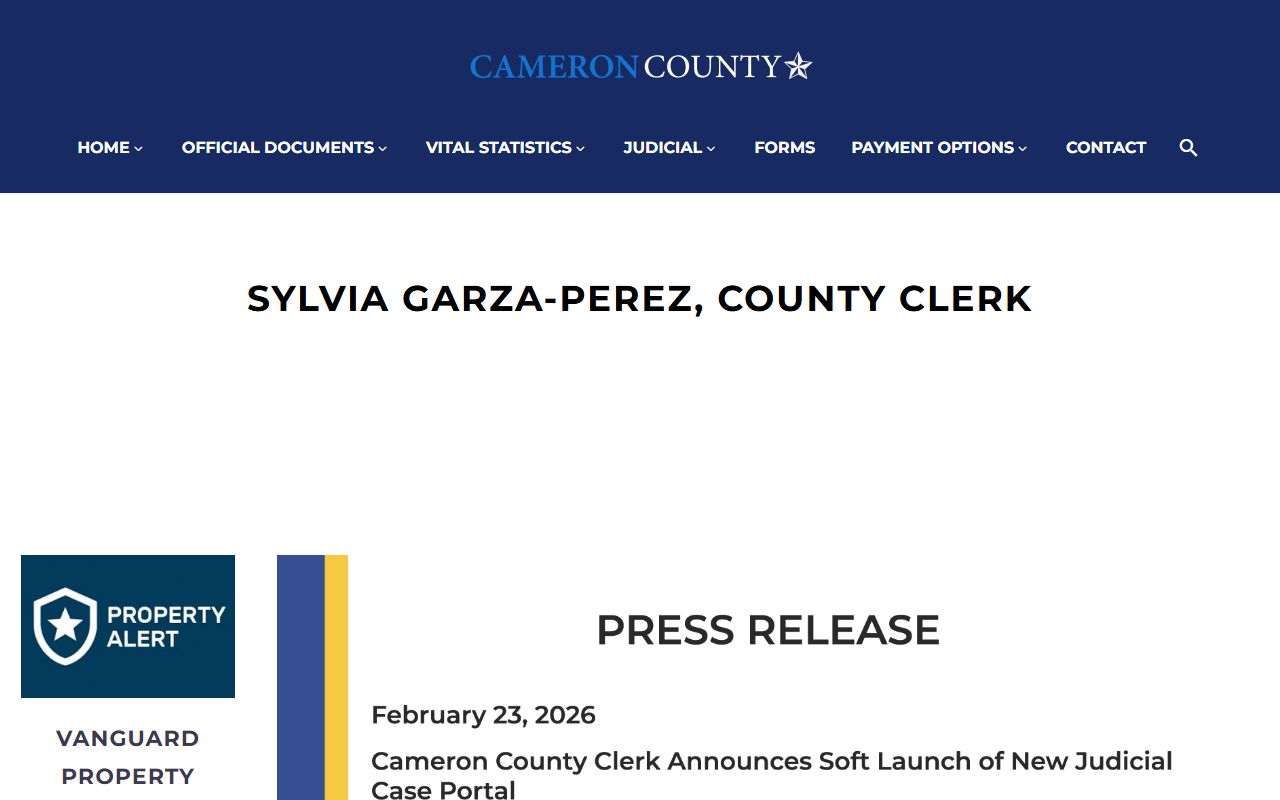
Use the online portal to search index data at no charge, or visit the office to view full document images and request certified copies.
How to Search Cameron County Property Records
You have three main ways to search property records in Cameron County. The county's online portal lets you search by grantor or grantee name, document type, date range, or instrument number. Basic index searches are free. Full document images may require a fee or subscription depending on how you access them.
For in-person searches, go to the County Clerk's office at 964 E Harrison St in Brownsville. Public access terminals are available at the office. Staff can guide you to the right index. You do not need an appointment for most records requests. If you need certified copies, bring payment for the certification fee and per-page copy charge.
Mail requests are also accepted. Send a written request describing the document you need, the party names, and the approximate date range. Include payment for copies. Response times vary, so plan ahead if you have a deadline.
Note: The County Clerk is not required by law to perform general record searches under AG Opinion WW-607. Staff may assist, but the legal obligation covers only federal tax lien searches.
Recording Fees and Copy Costs
Recording fees in Cameron County follow the state schedule set by the Texas Local Government Code. The first page of any recorded instrument costs $26. Each additional page is $4. Names indexed beyond five cost $0.25 each. Certified copies carry a $5 certification fee per document plus the per-page copy rate.
E-recording is accepted through authorized vendors. This allows title companies, lenders, and attorneys to submit documents electronically without a trip to the courthouse. E-recording is available outside normal business hours through the vendor platform.
Under Texas Property Code Section 12.001, an instrument affecting real property must be recorded to give constructive notice to third parties. Failure to record can leave a buyer or lender without notice protection in a subsequent transaction. Recording your deed promptly is a basic step in protecting your ownership interest.
Cameron County Appraisal District
The Cameron County Appraisal District maintains the official appraisal roll for all property in the county. You can search by owner name, property address, account number, or legal description. Results show ownership information, appraised value, exemptions applied, and property characteristics like size and improvement details.
The Cameron CAD website also provides interactive mapping tools that show property boundaries and recent comparable sales data.

Online protest filing is available through the CAD portal. The protest deadline is May 15 each year. Chief Appraiser Yvette Aguilar oversees the appraisal process, which is governed by the appraisal review board appointed by taxing entities.
Exemptions available in Cameron County include the homestead exemption, over-65 exemption, disabled person exemption, and disabled veteran exemptions. Applications must be filed with the CAD by April 30 of the tax year. The CAD also provides tax rate estimates and tax bill lookups.
Note: Appraisal values affect your property tax bill but are set independently from market value. You can protest your appraisal each year if you believe the value is too high.
Texas Property Law and Public Access
Property records in Texas are public records. Texas Property Code Section 13.001 establishes the legal framework for recording instruments and the priority rules that recording creates. A recorded deed or lien takes priority over an unrecorded instrument under Texas law. This recording system protects buyers and lenders who rely on the public record.
The Texas Public Information Act, Government Code Chapter 552, gives you the right to request and inspect public records including property documents. Governmental bodies must respond promptly, generally within 10 business days. The Texas Attorney General's Open Government Division at texasattorneygeneral.gov handles disputes about access and provides guidance on how to make requests.
Some information in property records may be redacted under Texas Property Code Section 11.008(k), including social security numbers and certain financial account data. The index information, grantor and grantee names, legal descriptions, and recording dates remain public.
Additional Property Research Resources
The Texas Comptroller of Public Accounts tracks property tax data statewide. The Property Tax Assistance Division provides forms, guides, and information on exemptions and protests. The Comptroller also maintains an Eminent Domain Database listing entities with condemnation authority in Cameron County.
The Texas General Land Office keeps historical land grant records for the region. Because Cameron County was part of early Spanish and Mexican land grants, the GLO land grant database may have records relevant to title research in the area. Records include original surveys, field notes, and correspondence from the 1800s.
The Texas State Law Library provides research guides on property law topics including landlord-tenant issues, real estate transactions, and probate matters that affect title. The library also links to free legal forms and TexasLawHelp resources. For questions about real estate professionals handling your transaction, verify licenses through the Texas Real Estate Commission.
Business entities involved in property transactions can be verified through the Texas Secretary of State SOSDirect portal. UCC filings that may affect personal property and fixtures are also searchable there.
Nearby Counties
Property records are filed in the county where the land is located. If your property is near a county line, confirm the correct county before filing or searching.