
Blanco County Property Records
Blanco County property records are kept by the County Clerk in Johnson City, Texas. You can search deeds, liens, mortgages, and other land documents online through the county's official portal. The clerk has indexed records going back to 1876, with current documents available online. Whether you need to look up ownership history, check for liens, or find a recorded deed, this guide covers how the system works and where to start.
Blanco County Overview
Blanco County Clerk Office
The Blanco County Clerk is the official custodian of all property records in the county. County Clerk Laura Walla and her staff maintain deeds, mortgages, liens, releases, and plat maps for all land in the county. The office is located at 101 E. Cypress St. in Johnson City and is open Monday through Friday.
Records in this office go back to 1876. The historical index from 1876 to 1991 can be accessed through KoFile. Current records are searchable online through the county's GovOS search portal at no cost for basic name lookups. If you need certified copies, you must contact the clerk's office directly or visit in person.
| County Clerk | Laura Walla |
|---|---|
| Address | 101 E. Cypress St., Johnson City, TX 78636 |
| Mailing | P.O. Box 306, Johnson City, TX 78636 |
| Phone | (830) 868-7357 |
| Hours | Monday through Friday, regular business hours |
The official online search portal lets you look up documents by grantor or grantee name, document type, date range, or instrument number. Results show document details and images. For older records from the historical index, the KoFile QuickLinks site provides access to the 1876-1991 index. You can also use TexasFile as a third-party search option.
Search Blanco County Property Records
The Blanco County Clerk maintains the official public records search for land documents filed in the county.
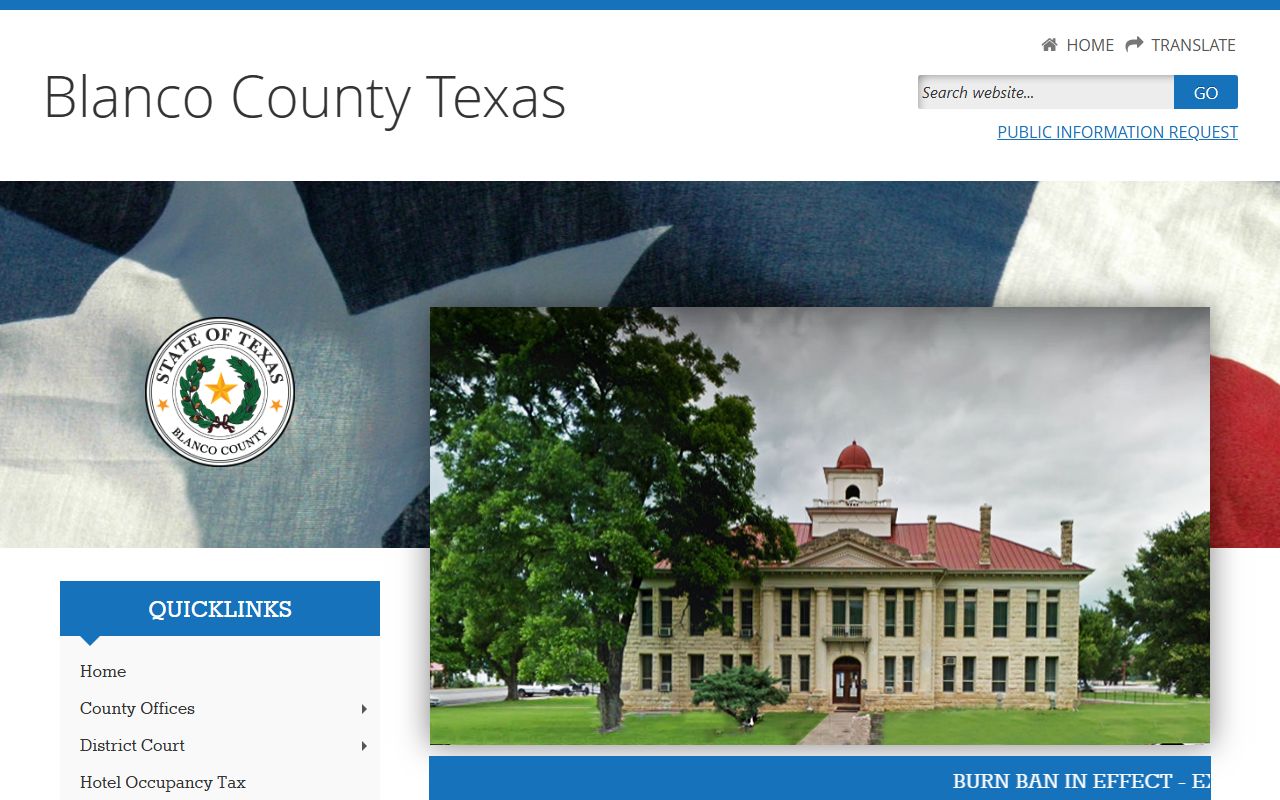
The clerk's office indexes all recorded instruments and makes them searchable by party name. Free online access is available for current records, while older historical documents require access through the KoFile archive system.
To search online, go to the Blanco County GovOS portal. You can search by the grantor name (person giving the property) or the grantee name (person receiving it). If you know the instrument number or the book and page number, those work too. Results show the document type, recording date, and the names of all parties. Document images are available to view online.
For in-person searches, visit the clerk's office at 101 E. Cypress St. during business hours. Staff can help you navigate the system but cannot conduct searches on your behalf under AG Opinion WW-607. You are expected to search the indexes yourself or hire a title company to do it for you.
Note: Records from 1876 to 1991 are in the historical index through KoFile and may not appear in the main online portal.
Types of Blanco County Property Records
The County Clerk records a wide range of documents that affect real property in Blanco County. Each one becomes part of the permanent public record once filed and indexed. Under Texas Property Code Section 12.001, instruments must be recorded to give legal notice to third parties.
Common property record types filed in Blanco County include deeds (warranty, quitclaim, and special warranty), deeds of trust, lien notices, lien releases, mechanic's liens, tax lien filings, oil and gas leases, easements, right-of-way agreements, plats and subdivision maps, and assumed name certificates. Each document gets an instrument number and is indexed by the names of all parties.
Plat maps are particularly useful if you are buying land in a subdivision. They show lot lines, street layouts, and easements. The clerk's office stores the original mylar plat maps along with the digital records. You can request prints of plat maps for a copy fee.
Under Texas Property Code Section 13.001, a recorded instrument is constructive notice to the world of its contents. This means once a deed or lien is filed in Blanco County, anyone who later buys or lends against that property is considered to have notice of it, whether they actually looked it up or not.
Blanco County Appraisal District
The Blanco County Appraisal District maintains appraisal records for all taxable property in the county. These records are separate from the County Clerk's deed records but are just as useful for property research. The CAD database shows current ownership, appraised value, exemptions, and property characteristics.
Chief Appraiser Candice Fry oversees the office at 615 North Nugent in Johnson City. You can reach the appraisal district by phone at (830) 868-4013 or by email at info@blancocad.com. The office is open Monday through Friday. Online property search at blancocad.com lets you look up parcels by owner name, address, or account number. If you disagree with your appraised value, you can file a protest online at the online protest portal.
The appraisal district records complement the clerk's deed records well. While the clerk's records show who owns the property based on filed documents, the CAD shows the current tax rolls. Both sources are useful when doing a full title search or due diligence on a property purchase.
Note: Appraisal district records update annually and may lag behind a recent sale or transfer by several months until the new deed is processed.
Recording Fees and Procedures
Recording a document with the Blanco County Clerk costs $26 for the first page. Each additional page is $4.00. If a document names more than five parties to be indexed, there is a charge of $0.25 for each additional name over five. These fees are set by state law and apply uniformly across most Texas counties.
You can submit documents for recording in person, by mail, or through eRecording services. Mail submissions should include a check or money order made payable to the County Clerk. eRecording is the fastest option and allows documents to be submitted and returned electronically. Major eRecording vendors like Simplifile and CSC work with most Texas county clerks.
Once a document is recorded, it gets a unique instrument number and is stamped with the recording date. The clerk returns the original document to the party who submitted it. Recorded documents are then indexed and made available online, usually within a few business days of recording.
Certified copies cost $1.00 per page plus a $5.00 certification fee. Uncertified plain copies are less expensive. For most purposes like title research or lien verification, uncertified copies are fine. If you need a certified copy for court or a government agency, ask specifically for a certified copy when you request it.
Texas Public Information Act
Property records in Blanco County are public documents. Under Texas Government Code Chapter 552, the Public Information Act, anyone can request copies of government records without stating a reason. You do not need to be the property owner or a party to the document to access it.
The clerk's office must respond to your request promptly. If it will take more than ten business days to produce the records, the office must notify you of the expected timeline. In most cases, property records are available immediately or within a short wait because they are already indexed and accessible. The Texas Attorney General's Open Government Division handles disputes about access to public records and publishes guidance on your rights as a requestor.
Some information within property records may be redacted. Under Texas Property Code Section 11.008(k)(1-2), certain personal identifiers like social security numbers and financial account numbers must be removed from online images. You may see blank fields in online document images where this information appeared in the original. The full information remains in the original paper record held by the clerk.
Additional Property Research Resources
Beyond the County Clerk and appraisal district, several other sources help with Blanco County property research. The Texas Comptroller's Property Tax Assistance Division provides statewide resources including exemption forms, protest procedures, and data on appraisal districts. Texas has no state property tax, but local taxing entities set rates that apply to property in Blanco County.
For historical land research, the Texas General Land Office maintains over 800,000 historical land grant records including Spanish, Mexican, and Republic of Texas grants. Blanco County land was part of original Texas land grants, and those early records are searchable through the GLO database. If you are researching a property with roots going back to the 1800s, the GLO archive is a valuable resource.
The Texas Secretary of State's SOSDirect system provides business entity records and UCC filings. If a lien involves a business entity, the SOS records can help verify the legal name and status of that entity. UCC liens filed at the state level can also affect business property and are searchable through SOS.
The Texas State Law Library offers research guides on property law topics. The library's online guides cover recording requirements, title issues, easements, and other real property topics relevant to Blanco County transactions.
Nearby Counties
Make sure you search in the right county. Blanco County borders several other Texas counties. If the property you are researching is near a county line, check the address carefully before searching.