
Lubbock Property Records Lookup
Lubbock property records are maintained by the Lubbock County Clerk, which serves as the official recording office for all real estate instruments in Lubbock County. If you need to find a deed, check for liens, or trace the title history on a Lubbock property, that office is where you start. Lubbock is the county seat and the largest city in the Texas South Plains region, with a population of around 259,000. All deeds, deeds of trust, plats, releases, and other property instruments for Lubbock are indexed at the county clerk and available for public search online or in person.
Lubbock Overview
Where to Find Lubbock Property Records
The Lubbock County Clerk holds all real property recordings for Lubbock. The clerk's office is at the Lubbock County Courthouse in downtown Lubbock. Lubbock is the county seat, so the recording office is centrally located and convenient to most parts of the city. Staff manage the deed index, process new filings, and handle copy requests at the counter. Records include everything from early plats and warranty deeds to recent mortgage filings and lien releases.
Lubbock County also has a robust online records portal. Most recorded instruments from the past several decades are available digitally with scanned images. This means you can do a large portion of your research from a computer before ever visiting the courthouse. For very old records or documents that are not yet in the digital system, an in-person visit may be necessary.
| Office | Lubbock County Clerk |
|---|---|
| Address | 904 Broadway, Room 207 Lubbock, TX 79401 |
| Phone | (806) 775-1043 |
| Hours | Monday through Friday, 8:00 AM to 5:00 PM |
| Website | lubbockcounty.gov |
Note: The City of Lubbock handles building permits and development services through its city website at mylubbock.us. Those city records are separate from property instruments filed at the county clerk.
How to Search Lubbock Property Records
Lubbock County provides online access to recorded instruments through its county clerk portal at lubbockcounty.gov. You can search by grantor name, grantee name, or document number. The system returns the document type, recording date, book and page, and party names. Scanned images are available for most records and can be viewed or downloaded from the portal.
The Lubbock city development services page at mylubbock.us is shown below, providing an overview of city services and development information for Lubbock residents and property researchers.

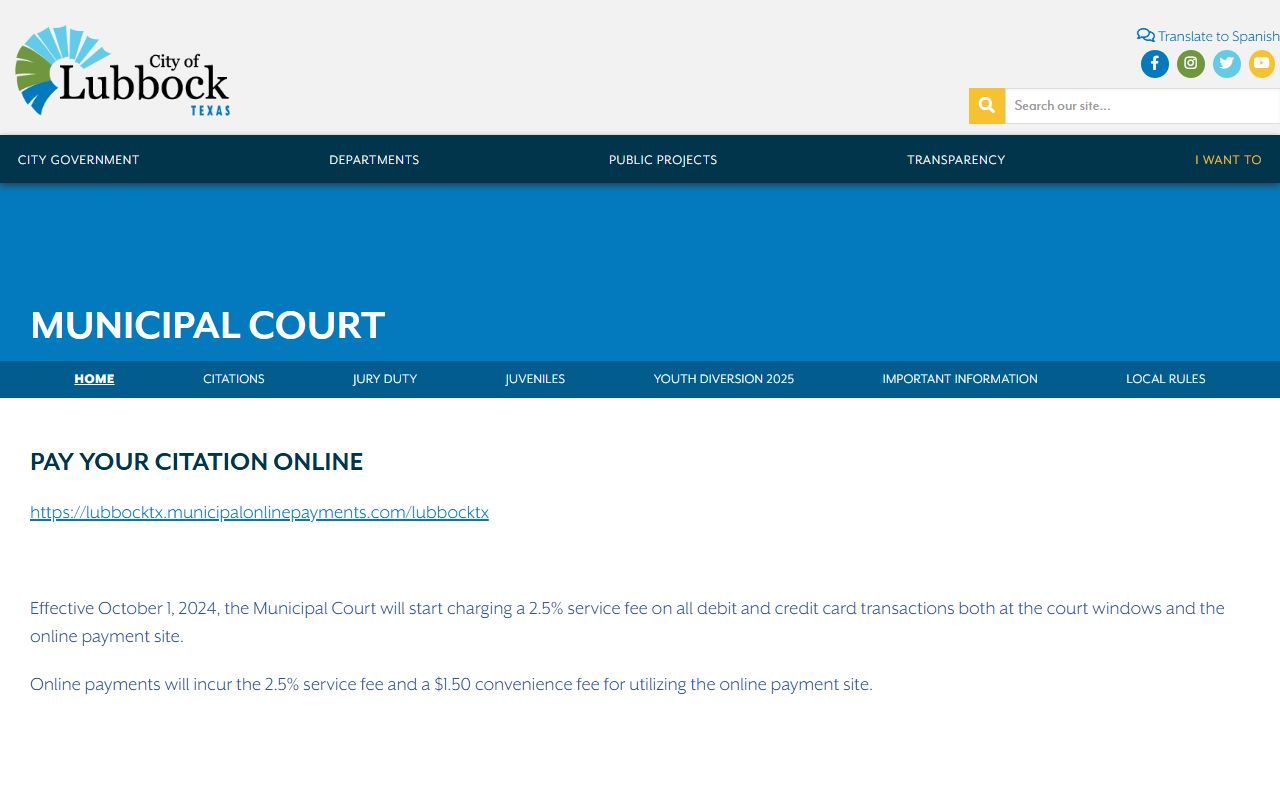
The municipal court section at mylubbock.us is shown below, providing information on the city's local court services.
The Lubbock Central Appraisal District at lubbockcad.org offers a free public search for all Lubbock County parcels. You can look up any Lubbock property by address or owner name and see current ownership, the legal description, and appraised values. This is a fast first step before pulling deed records at the county clerk.
Types of Property Records in Lubbock
The Lubbock County Clerk records all standard real property instruments. Warranty deeds are the primary transfer documents used in Lubbock home sales and include a seller's guarantee that title is clear. Quitclaim deeds pass along the grantor's interest without any guarantee. Deeds of trust are used to secure home loans and must be recorded to be enforceable. When a loan is paid off, the lender files a release of lien to clear the trust deed from the title.
Lubbock is a large urban area, and the county deed records reflect that scale. Subdivision plats from decades of residential development are on file. Mechanic's and materialman's liens are recorded when contractors do not get paid for work on properties. Commercial properties have additional instruments like ground leases, assignments, and financing statements. HOA declarations and deed restrictions for established neighborhoods are also part of the recorded document index.
- Warranty deeds and quitclaim deeds
- Deeds of trust
- Releases of lien
- Mechanic's and materialman's liens
- Subdivision plats and replats
- Easements and deed restrictions
- Affidavits of heirship and muniments of title
Lubbock Central Appraisal District
The Lubbock Central Appraisal District (LCAD) handles property appraisals for all parcels in Lubbock County. Their public search at lubbockcad.org lets anyone look up a property by address, owner name, or account number. Results include the current owner, legal description, land and improvement values, exemptions, and the full list of taxing entities that apply. The site is free and accessible at any time.
LCAD records are a practical starting point for any Lubbock property research. They confirm current ownership and the legal description, which you can then use to narrow a deed search at the county clerk. For investment properties or commercial parcels with multiple owners over time, the LCAD ownership history gives a useful summary view before you dig into individual deeds.
Property owners in Lubbock who believe their appraisal is too high can protest with the Appraisal Review Board. The deadline is May 15 or 30 days after the appraisal notice, whichever comes later. LCAD provides protest forms and step-by-step instructions on its website.
Recording Fees in Lubbock County
Lubbock County recording fees follow the state schedule under Texas Local Government Code Section 118.011. The standard fee is $26 for the first page of a real property instrument and $4 per additional page. A simple deed costs $26. Longer instruments like detailed deeds of trust cost more based on their page count.
Certified copies of recorded documents are available at a higher fee than plain copies. Call (806) 775-1043 to confirm current rates and to ask about payment methods before visiting the Lubbock County Courthouse. Knowing what to expect in advance saves time at the counter.
Texas Public Information Act
Property records at the Lubbock County Clerk are public records under the Texas Public Information Act, Government Code Chapter 552. Any person can request and inspect these records. You don't need to be a Texas resident, and you don't need to own property in Lubbock. No explanation is required for the request.
The clerk already provides broad access at the counter and online. A formal Chapter 552 written request is rarely needed for deed records. Personal identifiers are redacted from recorded instruments before they enter the public index, as required by Texas Property Code Section 11.008.
Additional Resources for Lubbock Property Research
The Lubbock County Tax Assessor-Collector handles property tax billing and collections for Lubbock and all of Lubbock County. Delinquent taxes are a lien on real property. Any outstanding tax balance must be cleared before a property sale can close. Tax account status is often visible through the LCAD website, or you can contact the county tax office directly.
The Texas General Land Office at glo.texas.gov holds original survey and land grant archives for West Texas. Some Lubbock area properties have title histories tracing back to surveys from the late 1800s when the South Plains were opened to settlement. For complex chains of title, the GLO archives can be a valuable supplementary resource.
West Texas Legal Services provides free legal help to qualifying individuals in the Lubbock area. The State Bar of Texas at (800) 252-9690 operates a lawyer referral service for licensed real estate attorneys. TexasLawHelp at texaslawhelp.org has free guides on deeds, liens, title disputes, and other property law topics relevant to Lubbock property owners and researchers.
Lubbock County Property Records
Lubbock is the county seat of Lubbock County, and all property records for the city are filed with the Lubbock County Clerk. For more on the clerk's office, recording procedures, and county resources, visit the Lubbock County property records page.
Nearby Cities
Other West Texas and South Plains cities with property records pages include: