
Grand Prairie Property Records
Grand Prairie property records are filed across three counties because the city spans Dallas, Tarrant, and Ellis county lines. Most of Grand Prairie falls within Dallas County, so the Dallas County Clerk holds the majority of real estate documents for the city. But if your property is in the western part of Grand Prairie near Arlington, it may be in Tarrant County, and a small portion of the city extends into Ellis County. Understanding which county holds your parcel is the first step in finding property records in Grand Prairie. The city has a population of around 196,000 and sits between Dallas and Fort Worth in the heart of the DFW metro area.
Grand Prairie Overview
Which County Holds Your Grand Prairie Records
Because Grand Prairie crosses county lines, the right recording office depends on where your specific parcel sits. For most Grand Prairie addresses, that means the Dallas County Clerk. Texas law requires real property instruments to be recorded in the county where the land is located. So the county line, not the city limit, determines which clerk's office has your deed.
The Dallas County Clerk is in downtown Dallas at the Records Building on Main Street. The Tarrant County Clerk is in Fort Worth at the county courthouse. The Ellis County Clerk is in Waxahachie. If you are not sure which county your Grand Prairie property is in, the quickest way to find out is to search the property address on the Dallas Central Appraisal District site at dcad.org. If it shows up there, it is in Dallas County. If not, try the Tarrant Appraisal District at tad.org or the Ellis CAD at elliscad.org.
| Dallas County Clerk | 509 Main Street, Suite 200, Dallas TX 75202 (214) 653-7099 |
|---|---|
| Tarrant County Clerk | 200 Taylor Street, Suite 301, Fort Worth TX 76196 (817) 884-1195 |
| Ellis County Clerk | 101 W. Main Street, Suite 101, Waxahachie TX 75165 (972) 825-5001 |
| Hours (all three) | Monday through Friday, 8:00 AM to 4:30 PM |
For the large majority of Grand Prairie residents, the Dallas County Clerk is the right office. The Tarrant County portion is mainly in the area near Joe Pool Lake and the western residential neighborhoods.
How to Search Grand Prairie Property Records
Start your search by confirming which county the property is in. Once you know that, use the appropriate county's online search portal. Dallas County's portal is at dallascounty.org. Tarrant County's is at tarrantcountytx.gov. Ellis County offers online access through its county clerk page at elliscounty.us.
All three portals let you search by grantor name, grantee name, or document number. The results show the document type, recording date, book and page, and names of the parties. For Dallas County and Tarrant County, many documents have scanned images you can view online. Ellis County has more limited online access, so older records may require an in-person visit or mail request.
The Grand Prairie city website at gptx.org handles city records including permits and zoning. If you want to research building permits or the city's records for a specific structure, the city portal is where to start. Those city-level records are separate from the county deed and lien records.
The Grand Prairie city portal is shown below, which provides access to city services and public information for the city.
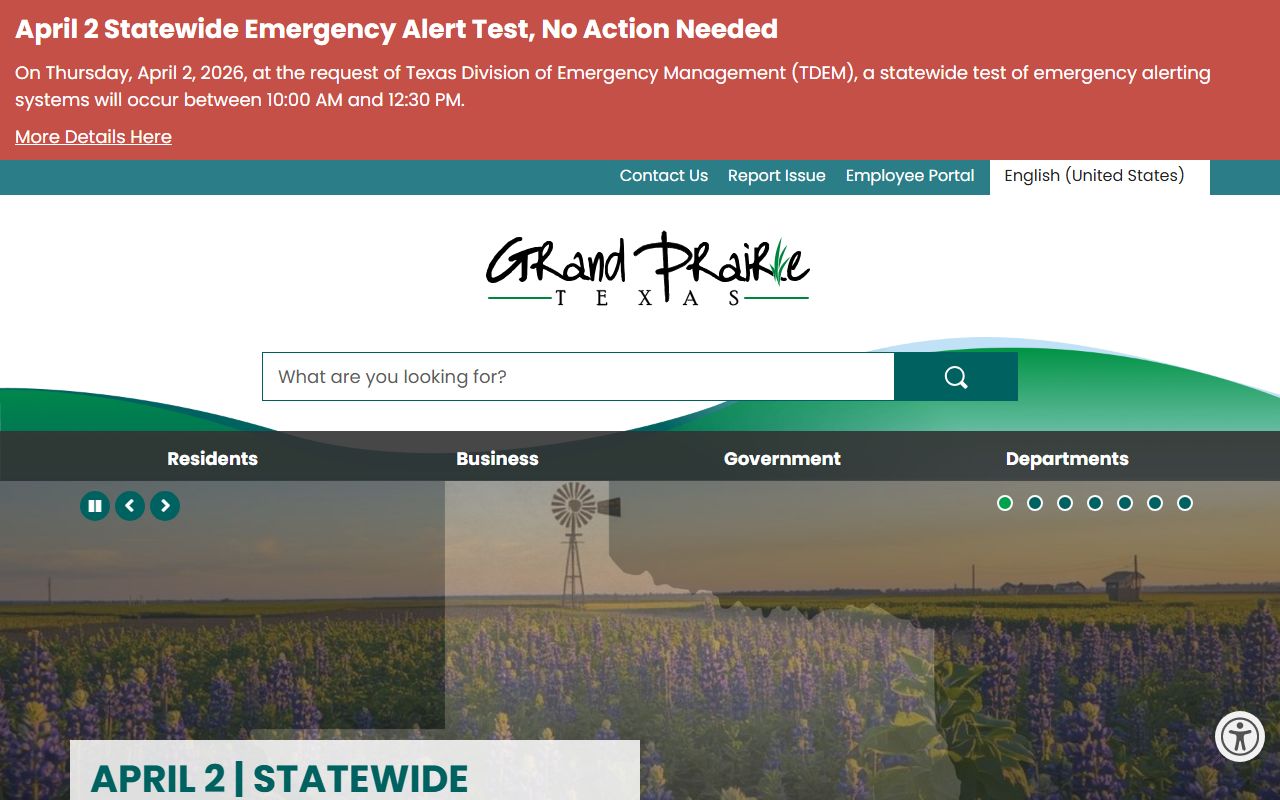
The city portal at gptx.org is the entry point for city-specific records, permits, and zoning information in Grand Prairie.
Types of Property Records in Grand Prairie
Regardless of which county holds your property, the types of instruments recorded are the same across all three county clerks. Warranty deeds record ownership transfers. Deeds of trust secure mortgage loans. Release of lien documents clear paid-off loans from the title. Mechanic's liens protect contractors and suppliers who were not paid for work on a property.
Plats are important documents for any lot in a platted subdivision. Each subdivision requires a filed plat before lots can be sold. Those plat records show lot dimensions, easements, street dedications, and drainage features. In Grand Prairie, most residential lots are in platted subdivisions, so the plat is a key part of the public record for those parcels.
- Warranty deeds and quitclaim deeds
- Deeds of trust and modifications
- Releases of lien
- Mechanic's and materialman's liens
- Plats and replats
- Easements and access instruments
- HOA declarations and restrictive covenants
Appraisal Districts Covering Grand Prairie
Three appraisal districts cover different parts of Grand Prairie. The Dallas Central Appraisal District at dcad.org covers the Dallas County portion, which is most of the city. The Tarrant Appraisal District at tad.org covers the Tarrant County portion. Ellis County properties are handled by the Ellis Appraisal District at elliscad.org. Each district lets you search for free by address, owner name, or account number.
Start with DCAD for most Grand Prairie addresses. It is free, quick, and returns the owner's name, legal description, and appraised value. If the address does not appear there, try TAD next. Between these two, you will find the large majority of Grand Prairie parcels. The Ellis County portion is small and mostly covers areas in the southern part of the city near the county line.
Note: If you think your Grand Prairie property is overassessed, you can file a protest with the appropriate appraisal district by May 15 or within 30 days of your value notice, whichever is later.
Recording Fees for Grand Prairie Properties
All three county clerks charge recording fees set by the Texas Legislature. Under Texas Local Government Code Section 118.011, the standard fee is $26 for the first page of a real property instrument and $4 for each page after that. This applies at Dallas, Tarrant, and Ellis county clerks alike. A standard two-page deed costs $30 to record at any of them.
Certified copies are more expensive than plain copies. If you need a certified copy for a court proceeding or lender, ask the clerk for the fee schedule when you request it. Most standard copies run a few dollars per page. Call the appropriate county clerk to confirm current rates before you make the trip.
Public Records Access in Texas
Property records held by Dallas, Tarrant, and Ellis county clerks are all public records. The Texas Public Information Act, Government Code Chapter 552, gives every person the right to access records held by Texas government entities. You don't need a reason to request them, and you do not have to be a Texas resident. All three county clerks provide public access through their counters and online portals.
Personal identifiers like social security numbers must be removed before instruments are released to the public, as required under Texas Property Code Section 11.008. This does not affect the usefulness of the records for title research. The name, dates, legal description, and document language remain intact.
More Resources for Grand Prairie Property Records
Tax records for Grand Prairie properties are held at the county tax office for whichever county the parcel is in. Dallas County's tax office is at dallascounty.org, Tarrant County's is at tarrantcountytx.gov, and Ellis County's is at the county website. Delinquent property taxes become a lien on the land and can affect a future sale or refinancing. Always check tax status when researching a property you plan to buy.
For permit history and city-level land records in Grand Prairie, the city's building services department handles permits and inspections within city limits. Contact the city at gptx.org for details on how to request permit records or zoning documents for a specific address.
Legal help with real estate issues in Grand Prairie is available through Lone Star Legal Aid for Dallas County matters. Call (800) 733-8394 or visit lonestarlegal.org. For Tarrant County matters, Legal Aid of NorthWest Texas at lanwt.org covers that area. The State Bar of Texas at (800) 252-9690 can refer you to a private attorney for either county.
Dallas County Property Records
Most of Grand Prairie is in Dallas County, and the Dallas County Clerk holds the bulk of the city's property records. For more detail on the Dallas County recording system and search tools, visit the Dallas County property records page.
Nearby Cities
Other DFW cities near Grand Prairie with property records pages include: